

RadiationStopper Pro Review: Buying Verdict

Product Name: RadiationStopper Pro
Product Description: Adhesive accessory marketed for wireless-device exposure concerns; product-specific effectiveness is not established.
Brand: RadiationStopper Pro
Availability: InStock
Why it scored 2.0/5
The sticker is easy to apply, but installation is not proof of protection. No persuasive product-specific reduction evidence was found, and current FTC guidance warns that partial shields may be ineffective or alter phone power.
Overall
-
Installation
-
Independent evidence
-
Signal implications
-
Purchase value
Pros
- Quick adhesive application
- No charging or app
- Does not alter the phone interface
Cons
- No credible product-specific exposure-reduction evidence
- Partial shielding can affect signal behaviour
- Can create reassurance without a measurable benefit
My verdict: RadiationStopper Pro is easy to stick onto a phone or device, but I found no credible product-specific evidence that the small sticker meaningfully reduces a user’s radio-frequency exposure. Current FTC guidance warns that partial shields may be ineffective and can make a phone work harder. I would not buy it as a safety solution.
A sticker can be convenient, discreet and well finished while still failing the central buying job. The key question is not whether it contains a chip or whether a meter moves near one point; it is whether the exact product reduces real-world exposure without degrading signal or increasing device power. The current marketing does not establish that.
What the product is
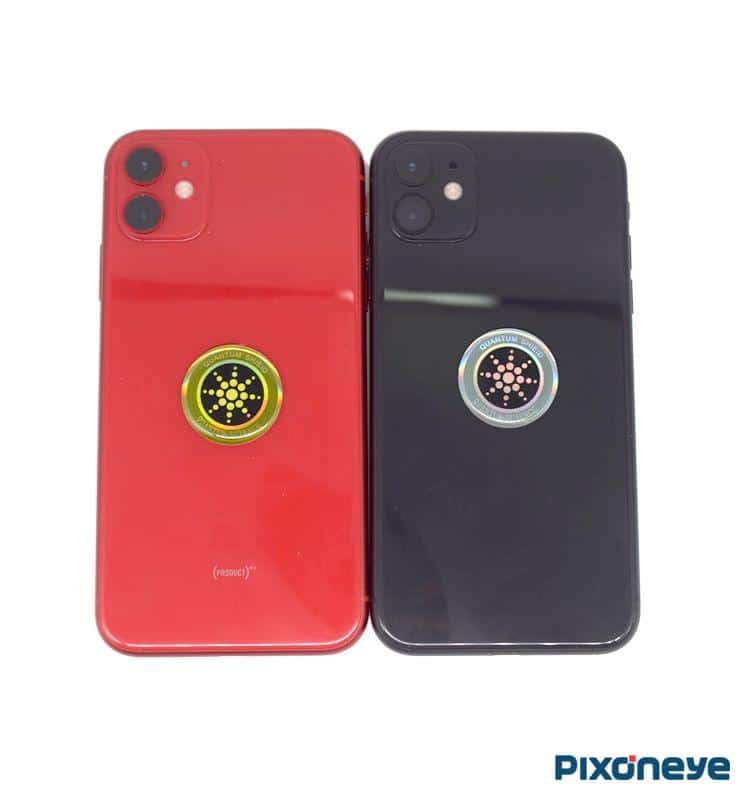
RadiationStopper Pro is sold as a small adhesive accessory for phones, laptops and other wireless devices. Application is simple: peel, position and press. That physical ease is genuine, but installation is not evidence of shielding performance.
Claims about “bio-armour,” quantum effects, harmonizing frequencies or protection across multiple wireless bands require robust product-specific testing. A logo, material description or demonstration video does not show what reaches the user during actual network use.
What current guidance says
The US Federal Trade Commission advises that there is no scientific proof that so-called phone shields significantly reduce exposure. It also warns that a product blocking only part of a phone may interfere with the signal, causing the device to draw more power and possibly emit more radio-frequency energy.
The Federal Communications Commission likewise explains that wireless devices must meet exposure limits, while accessories that alter a phone’s operating characteristics should not be assumed to improve safety. Those points make the burden of proof especially important for a small passive sticker.
| Choice | What it changes | Evidence confidence |
|---|---|---|
| RadiationStopper Pro sticker | Adds a small adhesive accessory | No persuasive product-specific reduction evidence found. |
| Speakerphone or wired headset | Increases distance from the transmitting phone | Directly reduces the phone’s proximity to the head. |
| Shorter calls or text | Reduces time spent with the phone close to the body | Simple, controllable behaviour. |
| Airplane mode when connectivity is unnecessary | Stops cellular and selected wireless transmissions when actually enabled | Clear device-state change; verify Wi-Fi and Bluetooth settings. |
What stood out in use
The sticker is unobtrusive and does not change the normal phone interface. That makes it easy to forget it is there, but it also provides no user-observable proof that exposure has changed. A perceived sense of reassurance is not a measurement.
- Application is quick and requires no charging.
- The accessory does not provide a readable exposure result.
- A small covered area cannot be assumed to shield the whole device or user.
- Signal changes, cases and placement can affect how a phone operates.
- Practical distance and usage choices do not require an unverified accessory.
Why simple meter demonstrations are weak
A handheld meter can vary with distance, orientation, network traffic, band, case and the phone’s power-control behaviour. Testing one spot beside one device does not demonstrate the user’s total exposure or the product’s effect across normal use. Reliable evidence would identify the phone, network conditions, test standard, laboratory, frequencies, placement and uncertainty.
Who should buy it
I cannot identify a buyer for whom RadiationStopper Pro is the most evidence-based choice. If you like the sticker as a decorative accessory, judge it that way. Do not rely on it to make prolonged close-contact use “safe” or to replace ordinary precautions.
Better practical choices
- Use speakerphone when privacy and surroundings allow.
- Use a wired headset for long calls.
- Avoid carrying an actively transmitting phone directly against the body when it is unnecessary.
- Wait for a stronger signal before making a long call, because phones can raise power in weak coverage.
- Use airplane mode during offline playback or sleep when connectivity is not needed.
Buying advice
If you still consider the product, ask for independent, model-specific test reports covering realistic placement and all claimed frequency ranges. A refund policy does not validate the underlying claim.
Frequently asked questions
Does RadiationStopper Pro block all phone radiation?
There is no credible product-specific evidence here that a small sticker blocks all radio-frequency exposure from a phone or other device.
Can a partial shield increase phone power?
The FTC warns that partial shields can interfere with a signal and cause a phone to draw more power, potentially increasing emissions.
What is a more dependable way to reduce proximity?
Speakerphone, a wired headset and keeping the transmitting phone away from the body directly increase distance.
Does an easy installation prove the product works?
No. Ease of application is a usability feature; exposure reduction requires appropriate independent testing.
Related Posts


Share this article

Stuart Kerr Spindlow is Pixoneye’s Publisher, Editor-in-Chief and Lead Product Reviewer. He tests consumer products and leads coverage of practical gadgets and personal-media preservation. His reviews focus on usability, limitations, value and the trade-offs that matter when choosing a product. Read Stuart’s full profile.
Leave a Reply