
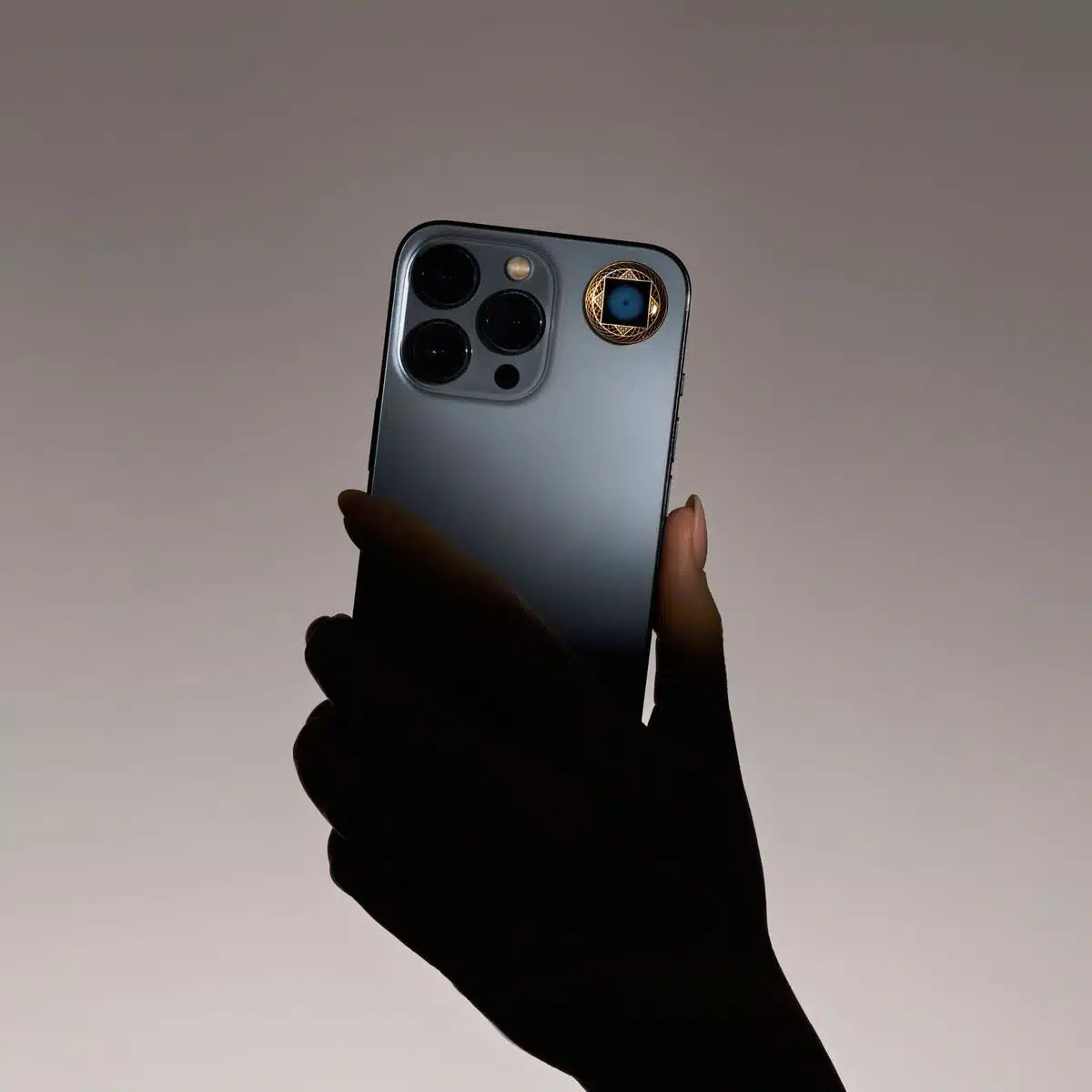
Aires One Review: Quick Verdict

Product Name: Aires One / Lifetune One
Product Description: Passive adhesive silicon-resonator accessory for personal electronic devices; no app or charging required.
Brand: Aires Tech
Our verdict
Aires One is easy to live with as an adhesive phone accessory, but I would not buy it as a proven way to prevent illness, improve sleep or reduce headaches. Its passive design and convenient attachment do not establish those benefits. If your aim is less radiofrequency exposure near your head during calls, speakerphone or a compatible wired headset is the more direct starting point.
Overall
-
Evidence for claimed purpose — 1.0/5
-
Device fit & attachment — 3.0/5
-
Upkeep & serviceability — 3.5/5
-
Cost & purchase terms — 2.0/5
Pros
- No app or charging routine
- Small adhesive accessory
- Simple physical setup
Cons
- Advertised health outcomes are not established by the material reviewed
- Case and adhesive compatibility need checking
- A costly way to pursue an uncertain benefit
My practical impression of Aires One is that a small stick-on accessory asks very little of you once fitted. That is its appeal. The harder buying question is what you receive for the money beyond that convenience. I separate handling and compatibility from the manufacturer’s proposed health mechanism, because one cannot validate the other.
What Aires One actually is
Aires One, also sold under the Lifetune One name, is an adhesive accessory containing a silicon resonator. It has no app to configure and does not need charging. It is not a phone battery, active signal booster or conventional shielding enclosure. The manufacturer’s explanation describes modulation rather than blocking radio signals. That is the company’s proposed mechanism, not a demonstrated medical benefit for the person carrying it.
A phone that still receives calls with the accessory attached has shown ordinary connectivity, not reduced biological harm. Equally, an unchanged consumer EMF-meter reading cannot establish the claimed health effect. These are different questions requiring different evidence. I would not use a phone’s signal bars, case temperature or a feeling of reassurance as a substitute for that evidence.
The claim-to-decision map
| Question | What can answer it | What does not establish it |
|---|---|---|
| Will it fit my phone setup? | Check its thickness, adhesive surface, case and charging stand | A general “all devices” promise |
| Does it lower RF exposure at my head? | Relevant controlled exposure measurements for that use | Normal signal bars or a patent |
| Will it improve sleep or headaches? | Well-designed research measuring that specific outcome | Testimonials, an EEG image or a personal before/after impression |
| Can I keep the phone farther away on calls? | Use speakerphone or a compatible headset | Sticking an accessory on a phone held against the head |
What the evidence means for the buying decision
The central limitation is the distance between the advertised promise and an outcome a buyer can rely on. A patent describes an invention; it is not approval of a health claim. An endorsement is someone’s recommendation. An EEG demonstration records brain activity under particular conditions. None of these alone establishes that an attached accessory prevents illness or treats a symptom.
To support a specific benefit, I would want the exact product and exposure conditions, a suitable comparison, controls for expectations, the outcome being measured and a meaningful follow-up. A study count on a sales page does not answer those questions. It also does not tell you whether a finding applies to your phone, your routine or the current retail product.
For broader context, the FDA’s current cell-phone guidance says the weight of scientific evidence has not linked cell-phone radiofrequency radiation with health problems. The US National Cancer Institute’s evidence summary says evidence to date suggests cell-phone use does not cause brain or other cancers in humans. Those statements do not validate Aires One, and I would not frame buying it as necessary protection from a proven everyday threat.
Headaches, poor sleep and fatigue can have many causes. A purchase should not delay assessment of persistent or concerning symptoms, and feeling different after attaching a device does not identify the cause of that change.
Attachment and phone-case compatibility
The physical convenience is real: there is no screen, charging cable or operating routine to learn. My experience of the low-maintenance format is more useful here than a claim of a measured health change. It is a small addition to a phone, but its raised profile still deserves a fit check.
The manufacturer warns against silicone and patterned cases where adhesive bonding can be unreliable. It also says a case may not fit over a unit attached directly to the phone. Check your intended mounting surface before removing the backing; leave cameras, ports and controls unobstructed. A generic statement that it works with electronics does not guarantee a good fit with every case, wallet, car mount or charging stand.
Dry-fit the arrangement and consider how you hold the phone. If the accessory makes the phone rock on a desk or prevents a mount closing properly, that is a daily inconvenience rather than a minor specification detail. Follow the supplied surface preparation and attachment instructions. Check the current pack for replacement adhesive rather than assuming it can be repeatedly peeled off and reused.
Care and long-term ownership
No rechargeable battery means there is no charging cycle to manage. It does not mean the coating, adhesive or resonator cannot be physically damaged. Look for a loose attachment, cracks or deterioration and follow the manufacturer’s care guidance. Do not infer an unlimited service life from the absence of moving parts.
The present Lifetune One product presentation includes different finishes and newer marketing material. Confirm the actual unit, included adhesive and instructions in the offer you choose. The current manufacturer photograph identifies the product; it does not document my own test or a measured protective field.
Cost, bundles and return terms
Aires One is a discretionary purchase. Compare the delivered single-unit price with the total for a multipack before deciding a discount makes it good value. Divide the payable total by the number of units you actually receive; compare like-for-like quantities and include delivery and tax. A larger bundle does not overcome uncertainty about the main promised benefit.
Check whether a promotion adds a membership or another recurring charge, which seller takes payment, the return deadline and any conditions for returning an attached unit. Keep the packaging and order details until you know the applicable process. Do not assume an offer page’s discount, shipping promise or guarantee applies to a different market or package.
If you still want to inspect the exact package, use the details as a buying comparison and judge the health claims with the limits above in mind.
A more direct alternative for call-time exposure
If your specific goal is to keep radiofrequency exposure farther from your head during calls, begin with the phone’s speaker mode or a compatible wired headset. NCI explains that exposure falls rapidly with distance and lists hands-free use among the options for concerned callers. This changes where the phone sits; it does not depend on a claim that a sticker makes a signal biologically harmless.
Speakerphone costs nothing if your phone already has it. A wired headset may be a better practical choice in shared spaces, provided the connector and microphone work with your phone. These options are not medical treatments, and they should not be sold as guarantees against cancer or other illness. Their advantage is a clear, limited purpose you can understand.
How I scored Aires One
The four equal-weight editorial criteria assess this category’s buying job. Evidence for claimed purpose: 1.0/5—the material reviewed does not establish the advertised everyday health outcomes. Device fit and attachment: 3.0/5—simple attachment, with case and surface restrictions. Upkeep and serviceability: 3.5/5—no charging routine, balanced against adhesive and physical-damage concerns. Cost and purchase terms: 2.0/5—a substantial discretionary spend whose central benefit is not established by the sales presentation. The mean is 2.4/5. This is a buying assessment, not a laboratory measurement.
My final recommendation
I would spend first on practical phone comfort and the way I use the device, rather than on an expectation that Aires One will change my health. Its simple physical design may appeal to an interested buyer, but that convenience does not justify treating the advertised protection as proven. If you decide to buy, choose the exact package deliberately and understand the return terms before attaching it.
Frequently asked questions
Does Aires One block phone radiation?
The manufacturer describes modulation rather than conventional signal blocking. Normal connectivity or an unchanged meter reading does not establish a health benefit.
Does Aires One need charging?
No charging or app is required for the passive accessory. Physical damage, adhesive condition and compatibility with your case still matter.
Can I put Aires One beneath any phone case?
Do not assume so. The raised unit can affect case fit, and the manufacturer warns about unreliable adhesion on silicone or patterned cases. Check the supplied instructions and your actual setup.
Would I buy it to improve sleep or headaches?
No. The information reviewed does not establish those outcomes. Persistent symptoms deserve appropriate assessment rather than relying on a phone accessory.
Related Posts

Share this article

Stuart Kerr Spindlow is Pixoneye’s Publisher, Editor-in-Chief and Lead Product Reviewer. He tests consumer products and leads coverage of practical gadgets and personal-media preservation. His reviews focus on usability, limitations, value and the trade-offs that matter when choosing a product. Read Stuart’s full profile.
Leave a Reply