

Kan-Breathe vs AirPhysio: Quick Verdict. Kan-Breathe is my pick when the flexibility of two supplied steel balls is useful for an appropriate airway-clearance routine. AirPhysio is the simpler buying fit when you already know the exact model and ball you need and prefer to keep that configuration ready. Both are ball-based OPEP devices; choose fit, handling and care rather than a promise of stronger lungs or less medication.
Kan-Breathe vs AirPhysio is a close design comparison. Both use a ball-and-cone mechanism to create oscillating positive expiratory pressure when the user breathes out. The buying difference is how the appropriate configuration is supplied and managed, along with the practical care routine and the seller’s terms.
For anyone managing a respiratory condition, start with the model and technique recommended by a clinician. These are airway-clearance devices, not nebulisers, oxygen supplies or substitutes for prescribed treatment. A device being small and non-powered does not make it suitable for every person or every symptom.
Kan-Breathe: two balls in the supplied kit
The current Kan-Breathe product listing supplies two interchangeable steel balls. That gives the owner a configuration choice within the same device. The useful benefit is having the appropriate option available, not making every session as demanding as possible.
I see that flexibility as Kan-Breathe’s main practical advantage. Changing and keeping track of the balls adds a small handling step, though, especially when the device is opened for washing. If you want to leave one known configuration ready, the extra option may not add much value to your routine.
For a child, confirm the exact model’s age limits, supervision and loose-part warnings with the supplied instructions and treating clinician before purchase. Keep both balls secure during cleaning and storage. A smaller ball or a child-friendly colour does not by itself establish suitability.
AirPhysio: buy the appropriate model

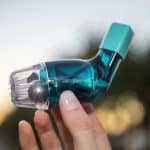
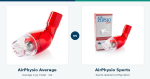
AirPhysio uses the same broad OPEP principle with its own body, cone and steel ball. Its range contains different configurations, including lower-resistance, children’s and Sports options. When comparing it with Kan-Breathe, establish which exact AirPhysio listing is under consideration rather than treating the entire range as one specification.
The AirPhysio user guide explains that ball selection depends on the user’s airflow needs. That is why an apparently more demanding device is not automatically a better purchase. A correct configuration that you can use appropriately is more relevant than a general “premium” or “sports” description.
I like AirPhysio’s straightforward portable format and the option to keep a known configuration ready. For more detail on its ownership strengths and limitations, see the AirPhysio review.
Configuration choice: where the difference matters
Kan-Breathe: two interchangeable steel balls.
Fit the appropriate ball; store the spare safely.
AirPhysio: select the exact model and ball configuration.
Keep that configuration ready for the routine.
Appropriate airflow and positioning • correct technique • clean, dry parts.
Neither route means “use the highest resistance” or “replace prescribed treatment”.
A two-ball kit and a model-specific purchase solve slightly different buying problems. If the spare ball has no role in the routine recommended for you, do not count it as a clinical benefit. If your clinician advises a configuration available in the Kan-Breathe kit, that supplied flexibility can be convenient.
Handling and technique
Both designs depend on exhaled airflow moving the steel ball against its cone. The angle at which you hold the device affects that movement, so comfortable positioning is part of learning the routine. Neither is a device you can ignore while it performs a powered treatment.
Keep the mouthpiece, body and loose parts correctly assembled before use. Follow the manufacturer’s technique and the schedule recommended for you rather than copying another person’s session length. If you become light-headed or uncomfortable, stop and ask about suitability and technique.
Kan-Breathe requires the owner to distinguish and manage the supplied balls. AirPhysio requires the buyer to select the correct model in the first place. I regard those as different ownership tasks, not a basis for claiming that either brand is medically more effective.
Cleaning and care
Kan-Breathe’s instructions explain how the body opens for cleaning and how the parts should be washed and dried. Allowing the pieces to dry properly before storage is part of the routine. The supplied spare ball should also be kept clean, secure and identified rather than left loose with other household items.
AirPhysio likewise requires washing, rinsing, drying and correct reassembly according to its instructions. The ball, cone and cover are functional components. A non-powered design reduces charging chores, but it does not eliminate maintenance.
My preference for daily care is a process with a clear place for every piece. If a component is damaged or missing, ask the manufacturer for the appropriate replacement rather than substituting a similar-looking part from another device. Keep one person’s respiratory device separate from another person’s equipment.
What the devices do—and what they do not do
OPEP combines expiratory back pressure and oscillation as part of an airway-clearance routine. It does not dispense a medicine. That distinction matters if you also use an inhaler or nebuliser: an OPEP device is not a replacement for either because it happens to be easier to carry.
Likewise, do not choose between these two by a promise of instant lung-capacity improvement, better oxygen absorption or less need for medication. Your condition, the appropriate technique and your clinician’s advice determine the role of airway clearance.
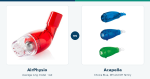
If positioning or another design feature is the difficulty, consider discussing a different OPEP mechanism rather than just changing brands. The AirPhysio vs Acapella comparison explains the model and positioning distinctions in that family.
Price, market and return conditions
For Kan-Breathe, compare the actual two-ball kit, the stated checkout currency and delivery to your country. For AirPhysio, compare one exact model against that kit rather than a family bundle or a child’s variant with a different supplied configuration. The delivered total is the useful price.
A discount does not remove the need to check the model and seller. Confirm the package contents, instructions, replacement support and current availability before ordering. Keep the order confirmation and the exact product reference.
Kan-Breathe’s current product listing describes a 30-day return window for an unused product in its original condition, with return postage excluded. That is not an invitation to try a used respiratory device for a month and return it. AirPhysio seller terms can differ, so read the conditions attached to your actual order.
If you need a different resistance configuration after purchase, ask about the correct model or part rather than assuming you can swap anything between brands. That support question can matter more than a small headline-price difference.
What two supplied balls do—and do not—buy you
The Kan-Breathe listing describes two steel bearings for different resistance configurations. That is a package advantage only if the alternative ball has a useful role in the routine recommended for you. It is not a second complete device, a spare mouthpiece or a device for another household member. The shared body and mouthpiece still need cleaning after personal use.
AirPhysio’s guide also describes different ball sizes across its range. The comparison is therefore about what is included in the specific purchase, rather than an exclusive ability to offer different resistance. Ask the seller to identify the supplied ball and exact variant in writing. A two-ball Kan-Breathe package should be compared with a complete AirPhysio package that meets the same need, not automatically with the cheapest search result carrying the brand name.
I would choose a ready configuration when I know which one is appropriate and want fewer loose pieces to identify after washing. I would choose the two-ball kit when the supplied options are useful and can be stored clearly. Neither choice is a reason to alternate resistance by guesswork.
A workable care routine at home and away
The AirPhysio guide separates cleaning after each session from its more vigorous daily cleaning advice. It identifies the mouthpiece/base, cone, ball and protective cap. Follow the version supplied with the device, including its cap-opening method, rather than forcing a cover because a different model in a video opens another way.
Use a clean surface or tray so the ball and cone do not roll into a sink or onto the floor. Keep one person’s device and parts together. After cleaning, check that every intended piece is present and correctly seated before use. Do not borrow an apparently similar ball from another brand: appearance is not evidence that its weight, diameter or action matches the device.
For Kan-Breathe, keep the supplied instructions with the kit and confirm the permitted cleaning and disinfection methods for that model. Do not copy a boiling, dishwasher or chemical-disinfection procedure from an Acapella or another OPEP device. A manufacturer’s “minimal cleaning” description is not permission to store a used respiratory device wet or skip its care instructions.
Travel makes these differences more noticeable. A small body saves bag space, but you still need the correct loose parts, a clean place to handle them and time for the required care. If a spare ball is packed, keep it secure and distinguishable from the one in use. For someone helped by a carer, reliable assembly and identification may matter more than a minor difference in the headline device price.
Compare ownership costs without inventing a lifespan
Neither design needs charging or disposable daily refill packs in normal use. That makes the upfront delivered price useful, but does not establish a lifetime cost of zero. Damaged or lost parts, a replacement device, shipping and any support needed still belong in the budget. Do not divide the price by an assumed five-year life unless the exact model’s evidence supports that assumption.
A simple way to compare offers is to write down four things: the complete model and supplied balls; the delivered total in the checkout currency; the correct replacement-part source; and the opened-product return rules. A low price is less useful if it covers a different variant or a package you cannot return after discovering it is unsuitable.
The current Kan-Breathe product page describes dispatch processing separately from delivery. Its processing window is two to five business days, and shipping notification is a later step. That is not a two-to-five-day arrival promise. Its 30-day unused-product return condition also differs from a trial of a used airway-clearance device. Keep those practical limits in mind when timing an order.
For AirPhysio, read the seller’s terms for the exact country and variant. A retailer’s policy does not automatically apply to the manufacturer’s store, and a return guarantee should not be treated as confirmation that a used device is accepted. If model fit is uncertain, resolve it before opening the package.
My final recommendation
Choose Kan-Breathe for the convenience of its two supplied balls when that choice fits the routine recommended for you. Choose the correct AirPhysio variant when you value a ready configuration and already know which model you need. The strongest buying distinction is configuration management, not an unsupported claim that one brand gives better respiratory outcomes.
Both need an appropriate user, correct technique and regular care. If your clinician recommends one exact device, follow that model guidance rather than substituting on the basis of a comparison winner.
Frequently asked questions
How long should a session with AirPhysio last?
Follow the supplied model instructions and the schedule recommended for your airway-clearance needs. Do not treat another person’s session length or a generic seller routine as personalised guidance.
Is an OPEP device like a nebuliser?
No. These devices create resistance and oscillation during exhalation; they do not deliver nebulised medicine. They do not replace a prescribed nebuliser or inhaler.
Is a prescription required to buy AirPhysio?
Purchase requirements depend on the product, supplier and market. Regardless of how it is sold, seek advice about the appropriate device and technique for a respiratory condition.
Related Posts
Share this article

Stuart Kerr Spindlow is Pixoneye’s Publisher, Editor-in-Chief and Lead Product Reviewer. He tests consumer products and leads coverage of practical gadgets and personal-media preservation. His reviews focus on usability, limitations, value and the trade-offs that matter when choosing a product. Read Stuart’s full profile.
Leave a Reply