
Comparison: Quick Verdict Choose by the task, rather than an overall winner: AirPhysio is the relevant option for an assessed mucus-clearance routine; the original Breather is the relevant option for an appropriate respiratory muscle-training programme. They do different jobs. My buying advice is to confirm that job with your respiratory clinician first, then compare the exact device, guidance and delivered price.
AirPhysio and The Breather look like small, simple breathing accessories, but the direction and purpose of the resistance matter. AirPhysio creates oscillating positive expiratory pressure, or OPEP, as you breathe out. The Breather provides independently adjustable resistance as you breathe in and out. Calling both “lung trainers” hides a difference that can make the wrong purchase unhelpful.
My preference is conditional. I value AirPhysio’s straightforward, power-free format when the goal is a suitable airway-clearance routine. I value The Breather’s separate controls when the goal is a suitable training workload. Neither preference establishes that the device will improve a particular person’s disease, and neither replaces prescribed treatment.
This comparison concerns the standard AirPhysio concept and PN Medical’s original Breather, not AirPhysio children’s or sports variants, Breather Fit or a peak-flow meter. Product instructions and source information were checked on 26 October 2026.
AirPhysio vs The Breather: the differences that matter
| Buying question | AirPhysio | The original Breather |
|---|---|---|
| Primary job | OPEP as part of airway clearance | Resistive respiratory muscle training |
| Breathing direction | The clearance action is produced on exhalation | Resistance is applied on inhalation and exhalation |
| Controls | Technique and positioning follow its own instructions | Six inhale and five exhale settings, independently adjusted |
| What it does not measure | Not a spirometer or an oxygen monitor | Not a peak-flow meter or a lung-function test |
| What to establish first | Whether airway clearance and this device suit your condition | Whether RMT suits your goal and how to set and progress the workload |
| Power and portability | Handheld, no electrical supply needed for use | Handheld, no electrical supply needed for use |
| Main practical limitation | Correct selection and technique still matter despite the simple design | More adjustable does not mean the highest resistance is appropriate |
| Emergency role | Not a rescue treatment | Not a rescue treatment |
Airway clearance
Assessment identifies retained mucus and an appropriate clearance routine.
AirPhysio: OPEP on exhalation
Pressure and oscillation are part of the clearance process; the plan also addresses how secretions are brought out.
Respiratory muscle training
Assessment identifies a suitable training goal and starting workload.
The Breather: resistance on inhalation and exhalation
Two independent controls let a prescribed training programme progress in each direction.
Separate boundary: neither branch replaces prescribed medication, an asthma action plan, CPAP or urgent assessment of new breathlessness.
Why mucus clearance and muscle training are different jobs
With OPEP, exhaled air encounters resistance and oscillation. In an appropriate airway-clearance programme, that can help mobilise secretions so they can be cleared. The American Thoracic Society’s bronchiectasis guidance explains airway-clearance methods and the role of coughing or huffing in bringing mucus out. That is a description of an approach to care, not proof that a particular brand is best for everyone.
Respiratory muscle training has a different target: breathing against a suitable workload. The original Breather uses resistive loading in both directions. Its settings allow the inhalation workload to differ from the exhalation workload. A person can therefore need a training device without needing an OPEP device, or need airway clearance without being prescribed muscle training.
My first question would be, “What task has my clinician actually recommended?” If the answer is only “something to help me breathe better”, I would get a more specific explanation before buying either. Breathlessness can have several causes, and a consumer comparison cannot establish which one applies.
How the OPEP option fits into a routine
AirPhysio’s manufacturer information identifies it as an OPEP device. The ball-and-cone arrangement produces the oscillating action during exhalation. Its simplicity is a practical advantage: there is no charging routine, connected app or power lead to manage during use.
That simplicity does not remove the need to learn the technique. Positioning, the mouth seal and the way you exhale affect how a device of this type works. If your clinician has selected an OPEP routine, have them demonstrate the exact model and check your technique instead of treating a sales video as an individual treatment plan.
I would also ask what happens after the breathing through the device. Mobilising secretions and clearing them are related but separate parts of the task. If you have difficulty coughing or bringing mucus up, that belongs in the assessment rather than being solved by assuming a stronger vibration is better.
The useful buying question is whether this particular device and its instructions fit the airway-clearance plan you can follow. I would not choose it to obtain a fixed pressure number, a guaranteed increase in lung capacity or a promised improvement after a set number of days.
How the resistive trainer differs in use
The original Breather has separate inhale and exhale controls. PN Medical’s instructions specify six positions on the inhale side and five on the exhale side. That distinction matters: it is not six identical settings for both directions, and the dial number is not a direct reading of your breathing strength.
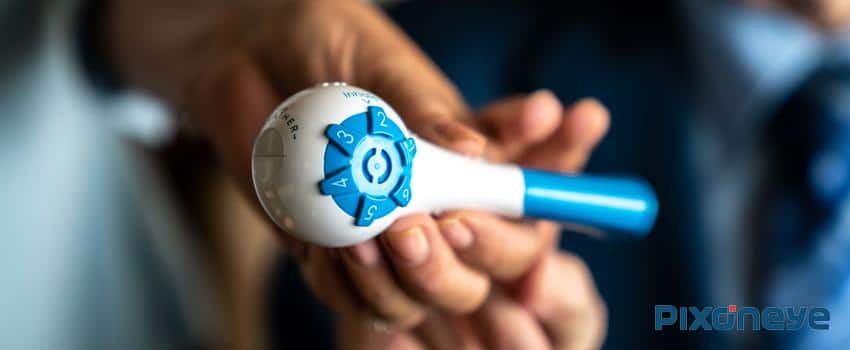
I like independent controls because they give a training plan room to distinguish breathing in from breathing out. The trade-off is that settings and progression need more attention. Turning both dials up together because the device feels easier is not the same as following a suitable programme.
PN Medical publishes a foundational training protocol and describes how a therapist can personalise it. Treat that as manufacturer training guidance. If you are using the device for a health condition, get the workload, repetitions, rests and review point set for you rather than borrow a generic “10–20 minutes” recommendation from a comparison page.
This device is not a peak-flow meter. It does not tell you whether an asthma episode is controlled, measure oxygen levels or provide a diagnostic result. If monitoring is part of your care plan, retain the separate monitoring equipment and instructions.
Which buyer should consider which option?
When airway clearance is the assessed need
AirPhysio is the more relevant of these two products when your clinician has recommended an appropriate OPEP approach for retained secretions. Its role should be considered alongside the clearance technique and review plan. The presence of a diagnosis such as COPD or bronchiectasis does not automatically identify this particular model as the right purchase.
For a person who mainly wants a general fitness accessory and has no mucus-clearance requirement, I would not choose AirPhysio merely because it is described as a lung-expansion product. Start from the actual goal. Our AirPhysio review discusses the device’s practical strengths and limits.
When respiratory muscle training is the assessed need
The Breather is the more relevant option when a suitable plan calls for resistive training of both inhalation and exhalation. The independent controls are its decisive practical distinction. They do not establish that everyone needs training in both directions, or that this original model is interchangeable with the company’s higher-resistance products.
The training goal might concern a rehabilitation plan or another assessed use. What matters for a buyer is that the plan identifies the device and how it will be used. Our full Breather review covers the original device separately.
When I would buy neither yet
I would delay the purchase if the main issue is unexplained, new or worsening breathlessness, if I could not identify the intended task, or if I had been told to avoid pressure-based breathing exercises. A lower price or a large number of favourable testimonials would not change that decision.
A clinician may recommend another approach or device entirely. Neither product needs to be declared an overall winner for the comparison to be useful. Avoiding a device that does not match the task is a better buying outcome than selecting a winner because it has a more persuasive offer.
Safety and suitability before ordering
These devices require effort and pressure changes. NHS Barnsley’s OPEP guidance, approved in February 2024, emphasises assessment and training and lists contraindications and cautions. Examples include pneumothorax, coughing blood, some heart or middle-ear conditions and recent surgery. This is a reason to discuss your history with the relevant professional, not a complete self-screening checklist.
Check the warnings for the exact product as well. Different breathing devices can have different instructions, so suitability for one does not establish suitability for another. If you have a respiratory or cardiovascular condition, recent surgery, an infection or uncertainty about your ability to use the device, discuss the proposed routine before starting.
Neither is an emergency breathing treatment. Follow your prescribed action plan. Severe or suddenly worsening breathing difficulty, chest pain, blue lips or collapse require urgent medical attention. Do not experiment with a resistance setting while postponing help.
For children, use only an age-appropriate device and a professionally advised plan. An adult comparison does not establish that the same model, resistance or routine is suitable for a child. A small mouthpiece and the ability to hold the device are not a substitute for that assessment.
COPD, asthma and postoperative claims
A disease name on a product page does not identify a universal treatment. In COPD, for example, airway-clearance needs and respiratory muscle-training needs are separate questions. The person’s symptoms, secretion burden, existing treatment and clinical assessment determine whether either approach belongs in the plan.
For asthma, do not replace controller medication, a reliever or a written action plan with either device. A training programme and treatment of airway inflammation or an acute attack are different things. A promise that a device prevents attacks or removes the need for medication would go beyond what this buying comparison can support.
After surgery, timing and technique should come from the treating team. I would not apply a generic daily routine simply because a device is handheld and drug-free. The relevant questions are what the team wants you to do, when it is appropriate and what symptoms should make you stop and contact them.
How to interpret the evidence and testimonials
I separate three kinds of information. Manufacturer instructions describe a device’s mechanism, controls and intended use. Clinical guidance explains how a category of treatment fits into care. A study examines a particular intervention in a particular group under defined conditions. Those sources answer different questions.
A study of OPEP or respiratory muscle training is not automatically a head-to-head trial of AirPhysio against The Breather. Nor does an improvement in one measured outcome establish better results for every diagnosis, fitness goal or daily activity. I would look for the exact device or technique, participants, training programme, outcome and comparison group before treating a research headline as a buying advantage.
Testimonials can be useful for practical themes such as whether instructions were clear or cleaning was manageable. They cannot establish an individual clinical benefit, prove disease reversal or show that someone else can safely reduce medication. My practical preferences here concern task fit and controls, rather than an invented clinical score.
Cleaning, handling and everyday ownership
Both devices are compact and power-free, which makes storage and travel relatively straightforward. In practice, the useful ownership difference is not a fraction of an ounce. It is whether you can assemble, hold, use, clean and dry the device correctly and consistently.
Keep the instructions for the exact model. PN Medical’s original Breather guidance recommends hand-washing with mild dish soap, rinsing and air-drying, and says not to use a dishwasher. AirPhysio has its own component and cleaning instructions. Do not assume that boiling, disinfectant strength or a dismantling procedure suitable for one is suitable for the other.
Ask about additional cleaning requirements if your clinician has identified an infection-control concern. Do not share a personal mouthpiece casually. Inspect components for damage, keep them dry for storage and obtain the correct replacement part rather than improvise a substitute that changes the airflow path.
For travel, pack the device so the mouthpiece and controls are protected. Keep enough time for cleaning and drying rather than sealing a wet device in a bag. The absence of batteries is convenient, but it does not make hygiene optional.
Cost, value and where to buy
Compare the exact model and complete delivered cost rather than an old “from” price. Check currency, quantity, tax, shipping, included mouthpieces or accessories, warranty and return conditions. A multi-buy price may apply only when you purchase more than one, and a marketplace listing can refer to a different model.
I would put task fit before price. A cheaper OPEP device is not good value if the recommendation was for respiratory muscle training. A trainer with more control positions is not an upgrade if airway clearance was the actual task. Support and clear instructions may matter more than an additional accessory.
Use the named manufacturer or an identifiable authorised seller and confirm how warranty and returns apply in your country. An affiliate offer is a seller offer, not necessarily the manufacturer’s own shop. The product information and instructions should still identify the exact model you receive.
Before paying, write down the model, the intended task and the agreed plan for learning and reviewing use. That simple check makes it easier to spot a listing for a children’s, sports or higher-resistance variant that does not match the product you meant to order.
My final recommendation
AirPhysio is my conditional choice for an appropriate, assessed OPEP airway-clearance task. The original Breather is my conditional choice for an appropriate resistive respiratory muscle-training task. The distinction is more useful than declaring either the best breathing device for everyone.
Confirm the task and suitability first. Then compare instructions, exact model, delivered cost and support. Keep prescribed care in place and judge any programme against the review plan agreed with your clinician, rather than a promised result in an advertisement.
Frequently asked questions
Is AirPhysio the same type of device as The Breather?
No. AirPhysio is an oscillating positive expiratory pressure device used in an airway-clearance routine. The original Breather is a resistive respiratory muscle trainer with separate inhale and exhale controls. They are not direct substitutes.
Which should I choose if I have COPD or asthma?
The diagnosis alone does not settle the choice. Ask your respiratory clinician whether your particular plan calls for airway clearance, respiratory muscle training, both or neither. Keep prescribed medication and your action plan in place.
How many resistance settings does the original Breather have?
PN Medical lists six inhale settings and five exhale settings, adjusted independently. These are control positions, not a measurement of your lung function or a reason to start at the highest setting.
Can either device treat a sudden breathing attack?
Neither is a rescue inhaler or emergency treatment. Follow your prescribed action plan and seek urgent medical help for severe or suddenly worsening breathing difficulty, chest pain, blue lips or collapse.
Can I use the same cleaning method for both?
Follow the instructions for your exact device. PN Medical recommends hand-washing the original Breather with mild dish soap, rinsing and air-drying, and says not to use a dishwasher. Do not transfer another device’s boiling, disinfecting or dismantling instructions to yours.
Is one device the overall winner?
My recommendation is conditional: consider AirPhysio when an assessed airway-clearance routine is the goal; consider The Breather when a suitable respiratory muscle-training plan is the goal. A device that does not match the task offers poor value even if it costs less.
Related Posts

Share this article

Stuart Kerr Spindlow is Pixoneye’s Publisher, Editor-in-Chief and Lead Product Reviewer. He tests consumer products and leads coverage of practical gadgets and personal-media preservation. His reviews focus on usability, limitations, value and the trade-offs that matter when choosing a product. Read Stuart’s full profile.
Leave a Reply