
TL;DR: I choose The Breather for simple combined inhale-and-exhale training. Its separate controls make that the clearest fit when both directions are part of your plan. I would choose a POWERbreathe IMT model for a specifically inspiratory programme, and a compatible feedback model or accessory only when tracking is useful. For a medical condition, start with your clinician’s device recommendation.
The Breather and POWERbreathe can look like close substitutes, but I would choose between them by the training goal and exact model. Paying for extra resistance or electronic feedback only makes sense when it fits the routine you actually need.
The practical differences at a glance
| Buying factor | The Breather | POWERbreathe IMT |
|---|---|---|
| Main task | Combined inspiratory and expiratory muscle training | Inspiratory muscle training; separate EMT models also exist |
| Adjustment | Manufacturer lists six inhale and five exhale settings | Classic and Plus use manual adjustment; model and resistance range matter |
| Feedback | Mechanical controls, no built-in digital tracking | Basic models do not include electronic monitoring; K-Series capabilities and Plus accessories vary |
| Ownership | Single-user device; cleaning and drying are part of use | Single-user use; cleaning depends on exact model |
| My buyer fit | A simple routine that requires both directions | A defined inspiratory programme, with optional tracking when justified |
The Breather: my choice for a combined routine

The manufacturer’s current product specification lists separate resistance settings for breathing in and out. I like that straightforward separation for a routine requiring both. It avoids buying a more complicated device just to obtain the two directions of resistance.
The limitation is that the dials are settings, not a progress report. I would keep a simple record of the agreed routine, technique and comfort rather than mistake a higher dial position for proof of a better result. It is also a single-user device, so sharing it is not an economy I would recommend.
POWERbreathe: decide which model you mean
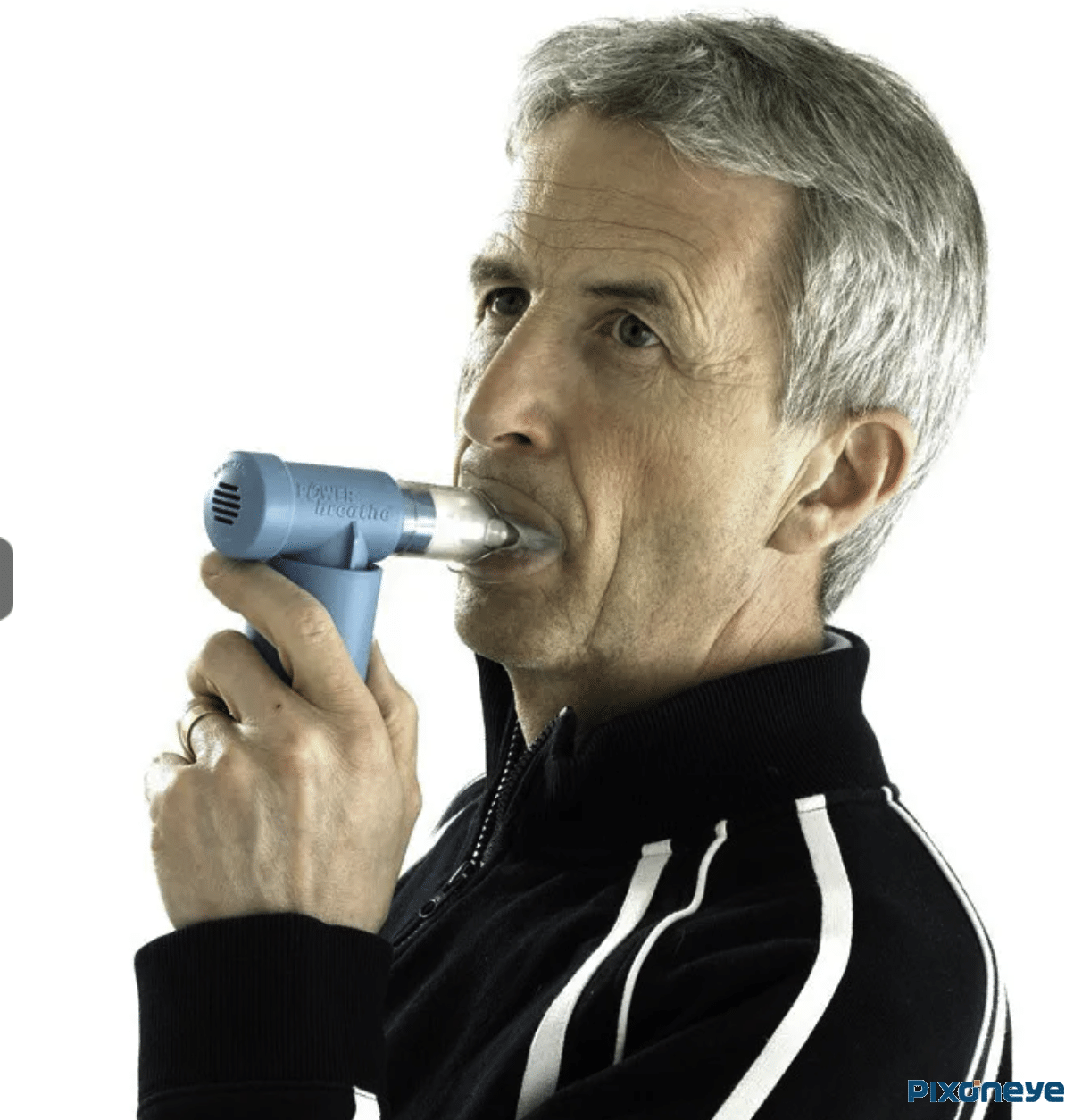
POWERbreathe’s model explanation distinguishes manually adjusted Classic and Plus IMT devices from the electronic K-Series. A compatible Smart Adaptor can add app-based feedback to Plus; it is a separate buying consideration. A basic mechanical model should not be described as having built-in digital monitoring.
The resistance-level guide also matters. A harder model is not automatically the better buy. I would select the range that lets the intended user follow the appropriate programme, rather than choose by colour or maximum resistance alone.
My preference is to pay for feedback only when it changes a decision: adjusting a programme, checking consistency or sharing useful information with a professional. If all you need is a simple inspiratory trainer, extra screens and software can increase cost and maintenance without solving a practical problem.
Setup, cleaning and the routine you can sustain
Before the first session, identify the exact model, read its manual and set up the programme recommended for you. Do not copy another person’s resistance or exercise schedule. Stop if using a device is painful or makes you unwell, and seek advice rather than pushing through.
POWERbreathe’s cleaning guidance separates Classic/Plus from K-Series. It says not to immerse the electronic handset and rejects boiling, microwave and dishwasher sterilisation. The Breather has its own cleaning guidance. Follow that exact device’s directions instead of transferring a cleaning recipe from another trainer. Allow parts to dry as instructed.
I would account for that drying time when choosing a daily routine. A device that is easy to rinse, dry and store is more useful than one left damp in a bag. Inspect parts and replace damaged components through the manufacturer; do not improvise valves or make unsupported modifications.
Evidence and safety
A 2026 randomised study in synchronised swimmers investigated IMT resistance approaches over four weeks. Its results concern that training setting. I would not turn that into a promise of a personal performance gain or a head-to-head clinical advantage over The Breather.
Read the manufacturers’ POWERbreathe precautions and The Breather adverse-effects guidance. A history of collapsed lung, recent surgery, ear problems, bleeding or other relevant conditions can require professional clearance. Do not change prescribed medication or care because a trainer is marketed as drug-free.
If mucus clearance is the main need, compare the different function described in our AirPhysio vs Aerobika guide. I would not buy a muscle trainer merely because an airway-clearance device looks similar.
What to check before paying
Compare the exact model, included case or accessories, cleaning supplies, local delivery and taxes. POWERbreathe is a range, so a single brand-wide price is misleading. A UK seller’s price should not be converted into an assumed US offer.
On 4 October 2026, The Breather’s direct product page advertised 30-day returns, while its warranty text said working single-user devices are not accepted for return. Those statements need clarification for an opened device. I would get written confirmation of the applicable return terms before opening the package. The same page describes a one-year manufacturing-defect warranty, which is a different protection from a change-of-mind return.
Keep the offer page and receipt. If ordering through another merchant, check that merchant’s policy separately. I would not choose a respiratory device on a supposed discount or money-back promise that the actual seller will not confirm.
Useful manufacturer instruction
This existing manufacturer video explains The Breather’s operation. Use the manual supplied with your own device and any professional instructions when setting the routine.
Final verdict
The Breather wins my simple combined-training use case; POWERbreathe IMT is my choice for a specifically inspiratory plan. I would move to an electronic or accessory-assisted model when its feedback has a clear purpose. Device suitability, a manageable routine and confirmed seller terms matter more than a universal winner or a promised treatment result.
Frequently asked questions
What are the main differences between respiratory trainers like The Breather and Powerbreathe?
The Breather provides separate inhalation and exhalation resistance in one device. POWERbreathe Classic, Plus and K-Series IMT devices focus on inhalation; the brand’s separate EMT products are different. Compare an exact POWERbreathe model rather than treating the whole range as one trainer.
How do breathing training devices like Aerobika and Acapella compare to The Breather?
Aerobika and Acapella are oscillating positive expiratory pressure devices used for airway clearance. The Breather is a respiratory muscle trainer. They serve different tasks; a clinician should decide which device, or combination, belongs in a care plan.
Can devices such as The Breather and Powerbreathe genuinely improve lung capacity and athletic performance?
Respiratory muscle training can improve selected strength or performance outcomes under suitable protocols, but it does not guarantee a bigger lung capacity or a sports improvement for every user. The goal, technique, consistency and person’s health matter. I would choose for a defined training need.
Are there any clinical studies supporting the efficacy of POWERbreathe for respiratory training?
Yes. POWERbreathe appears in published IMT research. One 2026 randomised study examined different resistance approaches over four weeks in synchronised swimmers. That is a particular population and protocol; it cannot establish a universal winner over The Breather or replace individual medical advice.
What advantages do Better Breathing devices have over traditional spirometry for lung health?
Spirometry is a lung-function test. A trainer and an airway-clearance device have different purposes, and the Better Breathing name should not be treated as a standard technical category. No consumer device should be bought as a substitute for diagnostic spirometry.
How does consistent use of The Breather affect respiratory conditions compared to competing products like HETARU and AirPhysio?
That depends on the condition and prescribed plan. The Breather’s muscle-training function differs from AirPhysio’s OPEP airway-clearance function. HETARU listings must be assessed by exact model and instructions. Do not add, replace or intensify treatment based on a comparison article.

Share this article

Stuart Kerr Spindlow is Pixoneye’s Publisher, Editor-in-Chief and Lead Product Reviewer. He tests consumer products and leads coverage of practical gadgets and personal-media preservation. His reviews focus on usability, limitations, value and the trade-offs that matter when choosing a product. Read Stuart’s full profile.
Leave a Reply