

LifeVac Review: Quick Verdict EUR 69.95 seller Home Kit
Product Name: LifeVac Home Kit
Product Description: Manual suction airway-clearance kit. US authorisation specifies second-line use after unsuccessful standard choking protocols, for victims at least one year old and adult operators. Follow the exact market label and current training.
Brand: LifeVac
Offer price: 69.95
Currency: EUR
Offer URL: https://pixoneye.com/go/lifevac
Our verdict
I would consider a genuine LifeVac kit as a prepared second-line option after first-aid training. Its US authorisation now provides a specific intended use, but the device can fail and should never delay established choking protocols. Choose the kit and instructions for your market, not an unbranded look-alike.
Overall
-
Preparation & use: 3.5/5
-
Intended rescue role: 4/5
-
Storage readiness: 4.5/5
-
Kit & ownership value: 4/5
Pros
- Manual mechanism without charging
- Home kit includes designated practice equipment
- Defined US authorisation and current training
Cons
- Not a substitute for first-line choking rescue
- Use error, suction failure and injury risks
- Market labels and kit contents require checking
LifeVac is a manually operated suction device for a choking emergency. The buying decision is about having a correctly labelled device, knowing its place in first aid and being able to retrieve it quickly. It is not permission to skip emergency calls or standard choking rescue.
My four buying scores: Preparation & use 3.5/5: Manual operation avoids charging, but mask selection, training and retrieval must be planned beforehand. Intended rescue role 4/5: A defined second-line role makes the buying purpose clearer; failure and delay risks still limit use. Storage readiness 4.5/5: The small kit and practice equipment support preparation when the correct kit is stored accessibly. Kit & ownership value 4/5: A genuine regional kit can complement first-aid preparation; contents, mask upkeep and replacement terms matter. Overall: 4/5. This is the equal-weight average, rounded to one decimal; it rates buying fit, not a promised result.
What LifeVac is—and the March 2026 change
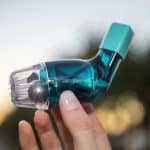
A bellows-style handle connects to a face mask. The user operates it manually to create suction; it has no powered pump or battery. A mask seal, correct use and preparation matter more than the simplicity of the product photograph.
The FDA granted LifeVac’s De Novo request DEN250012 on 4 March 2026, classifying it as a Class II device. The classification order specifies second-line treatment for complete airway obstruction after current basic-life-support choking protocols have been unsuccessful, in victims aged at least one year, administered by an adult aged at least 18.
That is marketing authorisation for defined use in the United States. It is more specific than the older statement that a company is merely FDA-registered. It does not make every suction device, every regional kit or every claimed use FDA-authorised. In particular, do not read “pediatric mask” as permission to use the US-labelled device on an infant under one.
Preparation comes before the emergency

My priority would be readiness: adults in the home should know where the kit is, identify the appropriate mask and review its instructions before it is needed. A sealed box hidden behind other supplies is less useful than an accessible kit everyone can locate.
The manufacturer’s training page provides current demonstrations, instructions for use and practice instructions. Use the designated training equipment according to those instructions. This review is a purchase assessment, rather than a substitute for a first-aid course or the supplied emergency protocol.
LifeVac’s US Home Kit includes adult, pediatric and training masks; the training mask differentiates it from the Travel Kit. Check the actual regional contents rather than assuming the picture or the word “home” guarantees identical packaging everywhere.
During a choking emergency, contact emergency services and follow current age-appropriate rescue guidance. The FDA’s updated safety communication puts established protocols first and warns that unpacking, assembling or reaching for a device can delay lifesaving action. LifeVac belongs after those protocols have failed, within its instructions.
My assessment: useful simplicity has practical limits
I value the absence of charging and the separate practice mask in a home kit. Those features reduce two avoidable problems: a flat battery and trying to understand unfamiliar equipment for the first time under stress. They do not remove the need for practice or correct mask selection.
This is a device whose emergency effectiveness cannot be judged from how reassuring it looks on a shelf. Manufacturer rescue stories illustrate reported incidents, but they cannot establish a guaranteed success rate for the next person. I would not pay more for a bundle based on a claim of 100% reliability.
The FDA review includes retrospective observational evidence. That is different from a randomised head-to-head trial proving superiority over standard rescue or another named device. My recommendation is therefore about preparedness and the authorised role, rather than a promise that it will always work.
Risks, maintenance and replacement
The FDA identifies risks including delayed basic life support, incorrect use, inadequate suction or device failure, and tissue injury. Its safety communication reports problems such as bruising and scratches. “Non-invasive” should not be translated into “risk-free.”
The authorised device is single-use for a choking emergency. Do not treat a sales claim about long storage life as permission to reuse a used rescue unit. LifeVac offers a replacement programme after reported emergency use; follow its reporting process and the policy applicable to your market.
The manufacturer’s Home Kit information recommends replacing masks every two to three years even though the stored device itself has no stated expiry there. Inspect the kit, maintain the instructions and follow the current label on your own masks. Put any replacement reminder where the household actually sees it.
Buy from an identifiable source. The UK MHRA’s 25 March 2024 alert warns that counterfeit and unbranded copies may fail or worsen a choking incident. Similar appearance is not evidence that the mechanism, mask or quality is equivalent.
Current seller price and bundle arithmetic
On 7 October 2026, the linked European seller displayed a single Home Kit at EUR 69.95. The displayed bundle totals were EUR 129.90 for two, EUR 179.85 for three and EUR 239.80 for four: approximately EUR 64.95, EUR 59.95 and EUR 59.95 per kit respectively. These are seller observations, before checkout-specific charges.
The four-kit option therefore showed no further per-kit reduction over the three-kit option. A household with one accessible storage point may gain more from training and organisation than from extra boxes. Multiple kits can make practical sense for genuinely separate locations, provided each has a trained user and current instructions.
Compare the exact LifeVac kit, delivery country, payment currency, return conditions and replacement process. European kits can carry different instructions and labelling from the US-authorised package.
Final buying recommendation
I would choose a genuine, clearly labelled kit with the right masks and usable training materials, then make storage and first-aid familiarity part of the purchase. I would avoid anonymous copies and any pitch suggesting that buying the device replaces standard rescue training. The strongest reason to own LifeVac is to have a prepared second-line option—not to feel exempt from the first line.
Frequently asked questions
What is the controversy surrounding the LifeVac device?
The central concern is delaying established rescue while retrieving or using a suction device, alongside incorrect use, suction failure and injury. US authorisation in March 2026 defines LifeVac’s second-line role; it does not remove those risks.
Is LifeVac approved by the FDA for choking emergencies?
The FDA granted De Novo marketing authorisation on 4 March 2026 for specific second-line use after unsuccessful basic-life-support protocols. The US indication covers victims at least one year old and operators at least 18. FDA registration alone would not establish that authorisation.
How does the LifeVac device compare to the Dechoker in effectiveness?
Do not infer a comparative success rate from testimonials or different company claims. LifeVac has the specific US authorisation discussed above. A purchasing comparison must also check each exact device’s current authorisation, instructions, masks and evidence; this review does not establish head-to-head superiority.
What are the common criticisms found in negative reviews of LifeVac?
Read complaints in terms of mask fit, assembly, accessibility, instructions and the seller’s service. Individual reviews cannot establish how often a device succeeds or fails. Delayed rescue and inadequate suction remain material risks regardless of an aggregate star score.
How should I assess claims about LifeVac lawsuits?
Check the named case, court, filing date and outcome before treating a claim as established. An FDA warning letter is a regulatory action, rather than a lawsuit. The FDA’s current communication records a 4 March 2026 close-out of its 2025 LifeVac warning letter; that is not a finding about all litigation.
Is the LifeVac or any anti-choking device endorsed by the NHS?
US FDA authorisation does not establish NHS endorsement. For UK first-aid advice, use the current St John Ambulance guidance linked by the NHS and local emergency instructions. A seller’s claim about medical use is not an NHS recommendation.
Related Posts

Share this article

Stuart Kerr Spindlow is Pixoneye’s Publisher, Editor-in-Chief and Lead Product Reviewer. He tests consumer products and leads coverage of practical gadgets and personal-media preservation. His reviews focus on usability, limitations, value and the trade-offs that matter when choosing a product. Read Stuart’s full profile.
Leave a Reply