

Quick answer: The best health device is the one that matches a defined job. For a professionally guided breathing-training routine, my shortlist starts with the Original The Breather; for an appropriate airway-clearance routine, consider standard AirPhysio. ZQuiet Comfort is a separate adult snoring choice, while LifeVac belongs in an emergency-preparedness plan. None is a universal health upgrade, and none of these four is a smartwatch or diagnostic monitor.
A useful non-wearable device should make a suitable routine easier to follow. That can mean choosing resistance settings, cleaning a reusable mouthpiece, finding a comfortable jaw appliance or keeping a genuine emergency kit accessible. It does not mean buying the gadget with the biggest promise of better lungs, deeper sleep or fewer medical appointments.
I assess these picks by intended purpose, exact model and setup, material limitations, and ownership cost. The order follows the jobs below; it is not a clinical effectiveness league table. A strong standalone buying score cannot make one category a substitute for another.
Choose by purpose first
1. Original The Breather: guided breathing training
2. Standard AirPhysio: an appropriate airway-clearance routine
3. ZQuiet Comfort: a ready-made adult jaw appliance
4. LifeVac: regional choking-emergency preparedness
| Product and further reading | Buying job | Main practical advantage | Check before ordering |
|---|---|---|---|
| Original The Breather; compare it with Breather Fit | Professionally guided respiratory muscle training | Separate inhalation and exhalation resistance settings | Suitability, an appropriate training plan and the Original model |
| Standard AirPhysio review | Airway clearance where appropriate | Unpowered OPEP design with a steel ball | Your clinician’s advice, supplied instructions and the resistance version |
| ZQuiet Comfort review | An adult snoring appliance when dental suitability allows | Ready-made pair with two fixed advancement options | Dental fit, jaw tolerance, replacement cost and seller terms |
| LifeVac review | Second-line choking rescue under the applicable label | Non-powered suction device with a defined emergency role | Genuine regional kit, age limits, training and local protocols |
1. Original The Breather: for a guided training routine
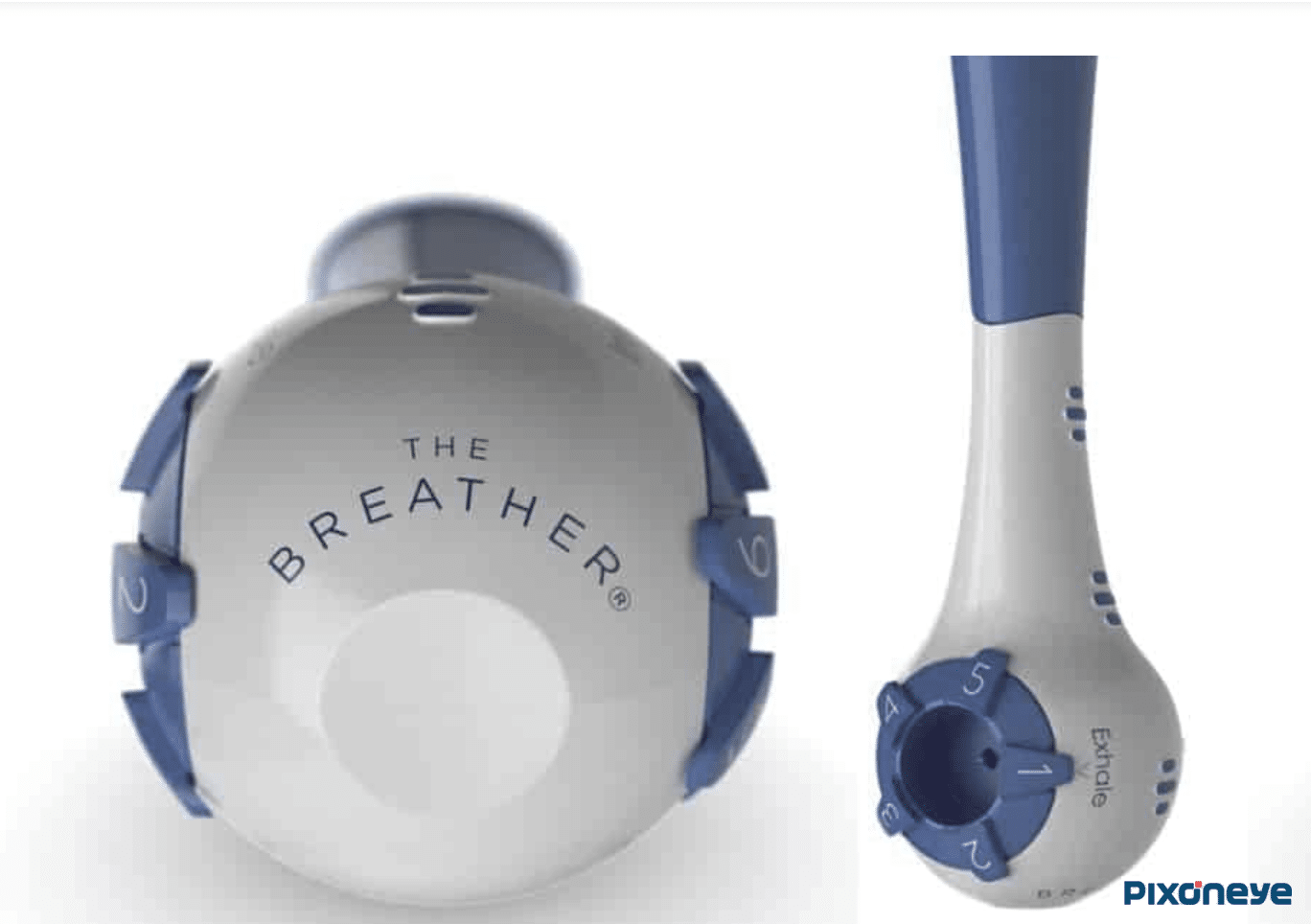
The Original The Breather is my starting point here for a buyer who has a suitable respiratory muscle training plan. Its useful distinction is separate resistance control for inhaling and exhaling: the current model has six inhalation levels and five exhalation levels. It is held in the hand and used for a planned session; it is not an overnight airway support device.
The original and Breather Fit are different resistance choices. A higher-resistance model is not automatically the better purchase. My preference for the Original in this guide reflects the need to start with an appropriate, manageable routine, rather than choosing an athletic-looking model or the highest setting.
Before buying, agree the routine and settings with the professional advising you, then follow the exact cleaning instructions. The controls offer repeatable settings, but they do not measure lung function or prove progress. The relevant ownership questions are whether you can use the device correctly, clean and dry it as directed, and maintain the planned routine.
Best fit: someone specifically seeking a suitable, guided training tool. Pass: if you want mucus clearance, a CPAP alternative or a gadget that supplies a diagnosis. The manufacturer’s model page supports the controls and intended training role; it does not establish a personal improvement in stamina.
2. Standard AirPhysio: for an appropriate airway-clearance routine

AirPhysio serves a different job. Its oscillating positive expiratory pressure (OPEP) design uses exhaled air and a steel ball to create pressure and oscillations. The practical buying reason is a compact, unpowered device for an airway-clearance routine where that approach is appropriate, not an all-purpose promise to increase lung capacity.
I would choose by the correct resistance version and usable technique. Standard, low-lung-capacity and children’s versions should not be treated as interchangeable. Position, exhalation and cleaning matter more than a “stronger is better” assumption. Follow the standard model instructions and the advice of the professional managing your condition.
Its lack of batteries makes charging unnecessary, but it still needs handling, cleaning and drying. A mouthpiece is a personal-use item, not something to share casually. Check whether the chosen seller supplies the exact model, current instructions and suitable return terms for an opened device.
Best fit: a buyer with an appropriate airway-clearance plan who wants a reusable OPEP device. Pass: if your job is adjustable inhalation training, measuring breathing progress or replacing prescribed treatment. The full review explains the current buying limitations. AirPhysio is not included here as a proven snoring solution.
3. ZQuiet Comfort: a ready-made adult jaw appliance

ZQuiet Comfort is the relevant choice if your buying job is a ready-made mandibular advancement appliance for adult snoring and your dental suitability has been checked. The Comfort pair offers two fixed advancement options, 2 mm and 6 mm. That gives a simpler starting choice than moulding a device, but it does not offer fine adjustment between those positions.
Comfort and ZQuiet Advance must be kept separate. Advance has a different fitting and adjustment process; its features do not belong in a Comfort description. My current ZQuiet review rates Comfort’s setup, fit options, care and purchase value at 3.8/5. That score concerns buying fit, not measured snoring reduction.
The continuing expense matters. Replacement frequency, whether you buy a single size after finding your fit, shipping and the seller’s returns can outweigh a small introductory discount. A two-size kit is useful for fitting; it should not be counted as two equally useful long-term replacements if only one position suits you.
Best fit: a suitable adult who values a ready-made jaw appliance and accepts its fixed choices. Pass or seek dental advice first: if jaw pain, loose teeth, dentures, dental work or other fit concerns make an appliance unsuitable. It cannot diagnose sleep apnoea or replace prescribed CPAP.
4. LifeVac: emergency preparedness, not daily wellness

LifeVac earns a separate place for emergency preparedness. It should not sit in a daily-health ranking as though owning it improves fitness or sleep. The important buying questions are genuine supply, the regional label, accessible storage and knowing when the device belongs in the choking protocol.
The US FDA order dated 4 March 2026 classifies LifeVac for second-line use after a current choking protocol has been unsuccessful, for complete airway obstruction. That US scope covers victims at least one year old and operators aged 18 or over. It is not an instruction to skip established first aid or delay emergency help.
The kit linked below is the European version. Check its supplied instructions and local requirements; the US authorisation does not automatically apply to every kit or market. Our LifeVac review explains the regional differences and how to identify genuine kits.
Best fit: a household or organisation adding a genuine, appropriately labelled device to a trained emergency plan. Pass: if the intended purchase is a cheap unidentified copy or a replacement for learning first aid. Training and accessible storage are part of the purchase decision, not optional extras after the box arrives.
Why pillows and hygiene gadgets are separate choices
Derila and ZenFluff pillows are comfort choices, while Bril toothbrush holders serve a different storage or hygiene role. Those jobs do not establish sleep-apnoea treatment, reliable snoring reduction or a general health improvement.
If you need a pillow, compare dimensions, materials, sleeping position and returns. If you need a hygiene accessory, compare its exact intended use and supporting evidence. Avoid paying for a medical promise that is unrelated to the item’s demonstrated function.
Compare the first year, not just the headline price
Write down the exact model, initial quantity, accessories you actually need, replacement items, delivery and taxes. Then add the recurring costs for the routine you expect to follow. A replacement mouthpiece and a consumable nasal aid have different budgets from an unpowered training tool or an emergency kit; comparing their headline prices alone is unhelpful.
Compare the total price in your currency, delivery charges and return conditions for the exact kit or model you choose. Prices and policies can vary between sellers, so use the terms shown for your order.
Check opened-product returns before buying an oral or respiratory device. Save the order contents, policy and model name. Start with the suitable basic choice instead of a bundle whose extra pieces you cannot use. No device in this guide produces a validated progress report simply because you have used it regularly.
My final recommendation
For a suitable guided respiratory-training plan, I would compare the Original The Breather first. For clinician-advised airway clearance, I would evaluate the correct AirPhysio version instead. ZQuiet is a dental-fit purchase, and LifeVac is an emergency-plan purchase. Choose the job, check suitability, then buy the exact model with terms you understand. If you cannot define the job, keep the money until you can.
Frequently asked questions
What is the best health device if you don’t want a smartwatch?
Choose by the job. Original The Breather is a guided training tool, standard AirPhysio is an OPEP airway-clearance option where appropriate, ZQuiet is an adult jaw appliance and LifeVac is an emergency device. None is a general health monitor.
Do non-wearable health and wellness devices actually work?
A device can have a useful, defined function without proving a broad health benefit. Check the exact model, evidence, suitability and technique. A seller’s testimonial is not a clinical result or a personal test measurement.
How do these devices help track progress without apps or screens?
These picks do not automatically track health outcomes. You can record whether you followed a planned routine, but resistance settings or hours of use do not measure lung function, overnight oxygen or snoring reduction. Ask your clinician how progress should be assessed.
Are wellness gadgets worth buying, or are most just hype?
Buy when the intended function fits a real need and its limitations and ongoing cost are clear. Pass on a device promoted mainly through vague transformation claims or as a substitute for suitable care.
Which types of health devices are best for everyday home use?
The right type depends on your plan and suitability. Training, airway clearance, dental snoring appliances and emergency preparedness are separate needs. A device meant for occasional rescue is not an everyday exercise tool.
Can health and wellness devices replace medical care?
No. Do not replace prescribed treatment, dental advice or established emergency protocols with a gadget. Get advice for unexplained breathing problems, possible sleep apnoea or other symptoms.
Related Posts
Share this article

Stuart Kerr Spindlow is Pixoneye’s Publisher, Editor-in-Chief and Lead Product Reviewer. He tests consumer products and leads coverage of practical gadgets and personal-media preservation. His reviews focus on usability, limitations, value and the trade-offs that matter when choosing a product. Read Stuart’s full profile.
Leave a Reply