
UVBrite Review: Quick Verdict

Product Name: UVBrite Go Bottle
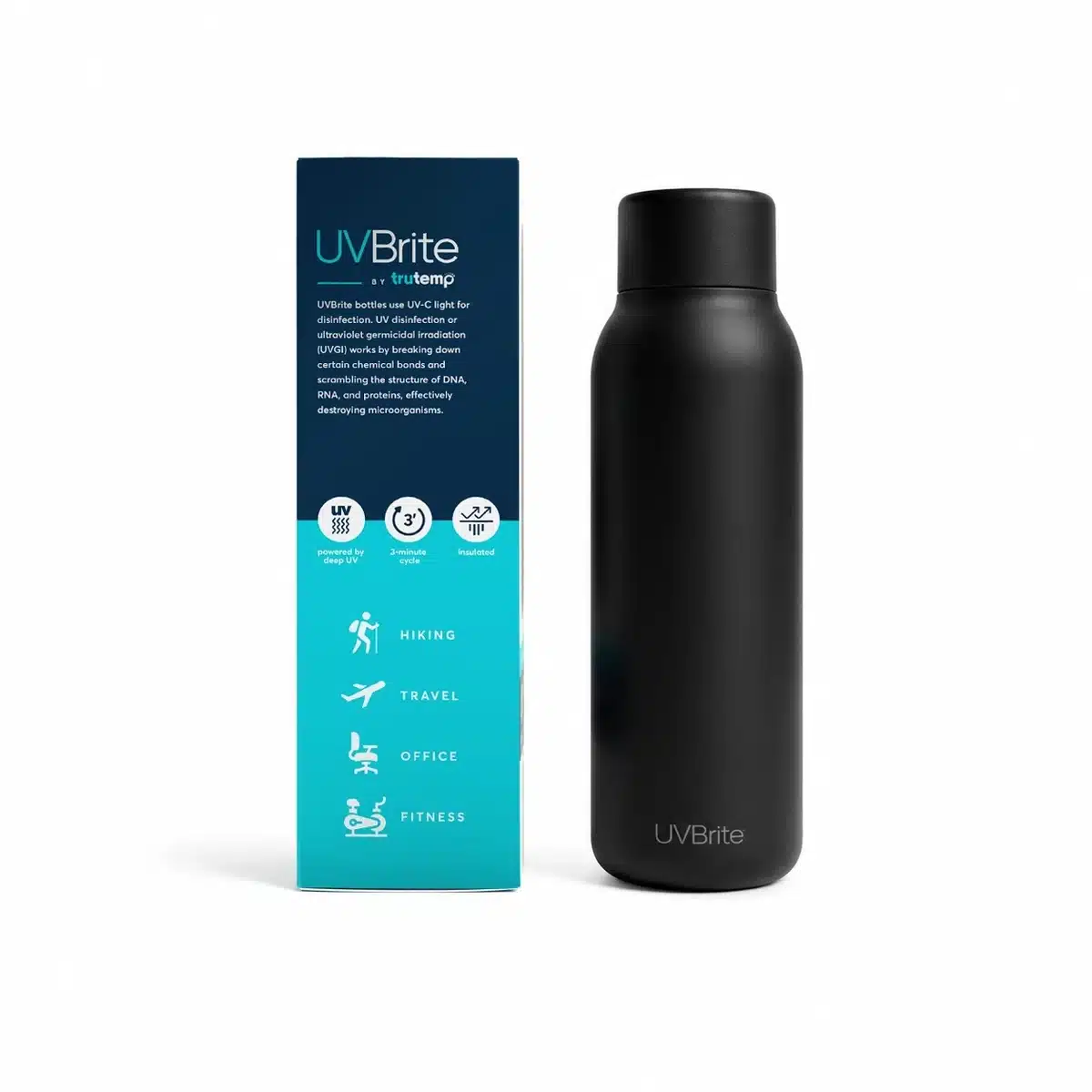
Product Description: A 550 ml insulated stainless-steel bottle with manually started UV-C cycles and USB-C charging; it has no physical filter or automatic cycle.
Brand: UVBrite
Offer URL: https://pixoneye.com/go/uv-brite-old
Our verdict
The UVBrite Go is a reasonable fit for someone who wants an insulated everyday bottle with a manual UV-C routine. I would use it with clear, already drinkable water. It has no physical filter and does not turn a stream-water trip into a safe plan on its own. The main compromises are its 550 ml capacity, charging and the need to start each cycle yourself.
Overall
-
Water-treatment scope
-
Daily operation
-
Bottle practicality
-
Buying terms
Pros
- Defined three- and five-minute manual cycles
- USB-C charging and insulated steel body
- No replacement filter to buy
Cons
- No physical filter or automatic cleaning cycle
- 550 ml capacity requires regular refilling
- Unused-condition returns limit a trial purchase
These UVBrite reviews concern the Go bottle. UVBrite also sells the Beam, whose filtration and automatic-cycle features should not be assumed to exist in the Go. Choosing the exact model matters more than buying a bottle simply because the brand uses UV-C technology.
What the Go bottle includes
The current UVBrite Go specification lists a 550 ml (18.6 fl oz) bottle, double-wall 304 stainless steel, BPA-free materials and USB-C charging. The UV-C light sits in the cap. There is no replaceable physical filter and no automatic self-cleaning cycle on this model.
The brand specifies a three-minute cycle after one button press and a five-minute cycle after two presses. It also advertises up to fifty cycles per charge and temperature retention of up to twenty-four hours cold or twelve hours hot. Those are manufacturer specifications; battery and insulation performance depend on use and conditions.
UV-C treatment is different from filtration
UV-C exposes water to ultraviolet light; a filter physically separates selected materials. The Go does not strain out dirt or sediment and should not be expected to remove chlorine, heavy metals, PFAS or other dissolved chemicals. It also does not improve an unpleasant taste in the way a suitable filter might.
Water clarity, exposure and correct operation matter to UV treatment. Cloudy water can interfere with light reaching microorganisms. A broad germ-reduction headline is not a guarantee for every water source, fill level or misuse. I would not treat the Go as a complete solution for untreated lake or stream water, flood water or a source with chemical contamination.
For daily office, gym or travel use, the practical question is whether you want this extra routine for a source you already consider drinkable. If you need filtration for a specific contaminant, select equipment with an applicable verified specification for that task. A UV-C cap alone cannot fill that role.
Daily use, charging and cleaning
- Fill with clear, drinkable water and follow the instructions for the bottle you receive.
- Close the cap correctly. Start the three-minute cycle with one press or the five-minute cycle with two, as described for the Go.
- Wait for the cycle to finish; an unstarted or interrupted cycle should not be counted as completed.
- Recharge through USB-C as needed and keep the charging port dry.
- Wash and maintain the bottle and cap as instructed. UV-C does not replace cleaning residue, the drinking rim or the exterior.
Manual operation is simple, but it is still a step to remember. If you refill several times during a day, the claimed fifty-cycle maximum describes cycles, not fifty days of use. Battery life will depend on how often you run the light and which cycle you choose. I would carry a suitable charging cable rather than assume the battery will cover an entire trip.
Capacity and insulation: the practical trade-off
At 550 ml, the Go is easy to fit into a desk or gym routine, but it holds less than a large hiking bottle. Someone drinking a litre during an outing will need a refill or another container. The lack of a filter means that refill source remains part of the buying decision.
The insulated steel construction is useful if you prefer drinks to stay cool. Treat the advertised twenty-four-hour cold and twelve-hour hot figures as upper limits under the brand’s conditions, rather than a promise of the same temperature throughout your day. Opening the bottle, repeated refills and ambient temperature change the experience.
Do not assume that the light handles coffee residue, flavoured-drink deposits or a dirty mouthpiece. A bottle advertised as self-cleaning still needs ordinary care; for the Go, the UV-C cycle is manually started. Keeping these tasks separate makes the product easier to judge realistically.
Price and return conditions
On 9 October 2026, UVBrite listed the single Go bottle at US$39.99, with an available purchase action. This is the bottle price; delivery and any applicable taxes affect the final total. The site advertised free US shipping on orders over US$75, so a single bottle does not meet that threshold on price alone.
The brand’s written return policy provides a thirty-day period from purchase and requires the item to be unused, in original condition and packaging, with return authorisation. The buyer pays return postage and outbound charges are not refundable. That makes it unsuitable to assume you can use the bottle for a month and then return it simply because you dislike the routine. Purchases through another seller follow that seller’s policy.
Choose the Go by its model name and feature list. The Beam is a different model, and accessories, filters or automated functions shown for it are not included features of the Go. If your main reason to buy is filtration, this review’s Go model will not meet that need.
My buying score: 3.4/5
These four equal-weight scores assess everyday buying fit. They are editorial judgments, not laboratory measurements of microbial reduction, insulation or battery endurance.
- Water-treatment scope — 3/5: manual UV-C has a defined role with clear water, but there is no filtration and the bottle is not a complete answer for uncertain water sources.
- Daily operation — 4/5: the two button-selected cycles and USB-C charging are straightforward; remembering to start them and maintaining the cap remain necessary.
- Bottle practicality — 3.5/5: an insulated steel body is useful for daily carry, but 550 ml means more refills and the advertised temperature figures are manufacturer limits.
- Buying terms — 3/5: the listed single-bottle price is clear, while the delivery threshold and unused-condition returns limit a low-risk trial.
The mean is (3 + 4 + 3.5 + 3) ÷ 4 = 3.375, rounded to 3.4/5. Treatment scope is limited by the Go’s intended role and absence of a filter.
Go, Beam or another bottle?
Choose the Go if you want a compact insulated bottle with a manual UV-C function and can use suitable refill sources. Look at a different, appropriately specified product if you need filtration or a larger capacity. The Beam’s feature list deserves its own comparison; it is not an upgrade that can be assumed from a Go purchase.
Our LARQ versus UVBrite comparison explains the model differences, while our self-cleaning bottle guide covers other options. Compare the exact versions, cycle controls and water-treatment scope before choosing.
Is the UVBrite Go worth buying?
I would shortlist the Go for everyday hydration with clear, drinkable water, provided its capacity and manual routine suit you. I would choose a different solution for filtering contaminants or treating uncertain outdoor water. Read the model details and delivery total, and keep the unused-return condition in mind before starting to use it.
Frequently asked questions
Does UVBrite Go filter water?
No. The Go has UV-C light in its cap but no physical filter. It does not remove sediment or dissolved chemical contaminants.
Does the Go clean itself automatically?
No. Start the Go cycles manually: one press for three minutes or two presses for five minutes. Continue ordinary bottle and cap cleaning.
How much water does the Go hold?
The current Go specification lists 550 ml, approximately 18.6 US fluid ounces.
Can I use it with stream or lake water?
I would not rely on the Go alone for untreated outdoor water. Clarity, microorganisms and chemical contamination are separate concerns, and this bottle has no filter.
Related Posts


Share this article

Stuart Kerr Spindlow is Pixoneye’s Publisher, Editor-in-Chief and Lead Product Reviewer. He tests consumer products and leads coverage of practical gadgets and personal-media preservation. His reviews focus on usability, limitations, value and the trade-offs that matter when choosing a product. Read Stuart’s full profile.
Leave a Reply