

FreshAir Pro review summary

Product Name: FreshAir Pro Personal Cooling Fan
Product Description: The FreshAir Pro reviewed here is the compact USB-powered personal airflow device described in my testing notes, rather than a dehumidifier or air purifier.
My verdict
FreshAir Pro’s quiet operation and portable USB-powered design worked well for close-range desk airflow in my use. It is best suited to personal comfort nearby; it does not replace whole-room air conditioning, dehumidification or particle filtration.
Overall
-
Cooling Performance
-
Noise Level
-
Build Quality
-
Portability
-
Value for Money
Pros
- Quiet operation in my use
- Easy to move between personal spaces
- USB-powered convenience
- Useful directed airflow close to the user
Cons
- Not whole-room air conditioning
- Does not provide room dehumidification or particle filtration
- Airflow depends on placement
- Check the exact model, power requirements and return terms before buying
What FreshAir Pro is designed to do
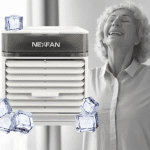
FreshAir Pro is a compact USB-powered personal fan. The reason to choose this format is directed airflow around a desk or another small personal space, especially where a bulky floor fan would be awkward. It is a different purchase from equipment designed to cool an entire room or remove moisture.
I liked the portability and quiet operation when using it close by. Those qualities made it practical to move between personal spaces and position where the airflow would reach me. The compact format is the benefit; expectations about whole-room cooling are where this type of device can disappoint.

Airflow and noise in everyday use
Placement made a difference in my use. The airflow was most useful when directed towards me rather than blocked by desk clutter or pointed across the room. Before buying a compact fan, think about where it will sit and whether there is a clear path from the grille to your seated position.
Quiet operation was a positive. I found it unobtrusive in the spaces where I used it, which matters for a device sitting near a keyboard or work area. Noise preference is personal, though: someone who wants complete silence at bedtime may judge the same fan differently from someone working in a busy room.
I would start by choosing a stable position, directing the airflow and adjusting the controls available on the actual unit. Moving a small fan closer can be more useful than expecting it to reach across a large room. Keep loose papers, hair and fabrics clear of the air path.

USB power and portability
USB power is convenient when you want a small fan near a computer or another suitable power source. It also makes the cable arrangement part of the decision: check where the unit will sit, how the cable will reach it and whether it can remain secure without trailing across a walkway.
A USB connection describes the power input. It does not by itself mean the fan has an internal rechargeable battery or can run all day without a cable. Check the power label, included cable and instructions for the exact device being sold, and use a power source that meets those requirements.
I found the compact format easier to move than a bulky fan. That is most valuable when one person wants airflow at different desks or seats. For several people spread around a room, a larger fan with a broader airflow pattern may be a better fit than moving a small personal unit repeatedly.
Personal comfort versus room cooling
A fan moves air around you; an air conditioner uses refrigeration to remove heat from the room. Directed airflow can make sitting nearby more comfortable, but it is not the same as lowering the temperature throughout a hot room.
The same distinction applies to damp and air quality. Removing water requires a dehumidifier with an appropriate extraction capacity. Filtering particles requires an identified filter and suitable performance for the space. Those are not jobs I would assign to this USB fan.
This is the key buying choice: choose FreshAir Pro’s format for nearby airflow and portability. Choose equipment specified for room cooling, moisture extraction or filtration when that is the actual problem. Buying the smaller device because it occupies less desk space will not solve a different environmental need.
Setup, cleaning and practical care
Place the fan on a secure surface and keep its airflow unobstructed. Do not balance it where it could fall onto a child, pet or bed. A stable desk position is preferable to improvising a mounting arrangement that the unit’s instructions do not support.
Disconnect the power before cleaning. Keep electrical components dry, and use the cleaning method specified for the unit rather than spraying liquid into the grille. Check the cable and connector for damage, and stop using the fan if either is damaged or the unit behaves abnormally.
If a timer, particular speed setting or wall mounting is essential, establish that the exact model includes it before ordering. Similar product names and promotional pictures are not enough to establish the controls, accessories or mounting hardware in a seller’s package.
Buying advice and final recommendation
Before ordering, look for a clearly identified seller, the exact model, power requirements, included accessories and an accessible return process. Compare the delivered price with a well-documented desk fan, rather than treating a temporary promotion as the main reason to buy.
FreshAir Pro’s appeal for me was quiet, portable personal airflow. I would choose it only where the user will sit nearby and the compact footprint is useful. A larger fan makes more sense for moving air across a wider area; an appropriately specified air conditioner is the relevant comparison when the goal is actual room cooling.
For an existing owner, start with placement and care: keep the air path clear, use a suitable power source and position the fan securely. Those practical choices matter more to everyday usefulness than broad claims about replacing several household appliances.
Frequently asked questions
Is FreshAir Pro an air conditioner?
The compact USB fan reviewed here provides personal airflow. It does not use refrigeration to cool an entire room.
Does USB power mean FreshAir Pro has a battery?
No. A USB connection identifies the power input, not the presence of a rechargeable battery. Check the exact unit’s specifications and included accessories.
Where should I position a small personal fan?
Use a stable surface close enough for the airflow to reach you, with the grille unobstructed. Keep the cable secure and follow the product’s power and mounting instructions.
Related Posts

Share this article

Stuart Kerr Spindlow is Pixoneye’s Publisher, Editor-in-Chief and Lead Product Reviewer. He tests consumer products and leads coverage of practical gadgets and personal-media preservation. His reviews focus on usability, limitations, value and the trade-offs that matter when choosing a product. Read Stuart’s full profile.
Leave a Reply