

AutoBrush is worth considering if a conventional brushing routine is difficult to maintain and a U-shaped mouthpiece fits comfortably. I would choose it for that specific need, rather than buy it simply to shorten an already effective routine. The current Sonic Pro uses nylon bristles and requires guided movement; it is not a hands-free silicone mouthguard.
The most useful buying questions are whether the head reaches your teeth, whether you can follow the technique, and what replacement heads will cost. Those matter more than lights or headline cleaning percentages.
Quick verdict: AutoBrush Sonic Pro Check current price

Product Name: AutoBrush Sonic Pro
Product Description: Nylon-bristle U-shaped electric toothbrush with selectable timers; fit and guided movement are essential.
Currency: USD
Verdict and buyer fit
My verdict: Consider AutoBrush if a conventional routine is difficult and its mouthpiece fits. The current nylon-bristle series is ADA accepted, but requires guided movement. Choose a conventional brush if your existing routine works well or you prefer a smaller head.
Best for: a specific brushing-usability need. Main limitations: fit, technique and replacement-head costs. Scores express editorial judgement, not measured clinical results.
Overall
-
Usability and controls
-
Mouthpiece fit and flexibility
-
Product evidence and clarity
-
Ownership value
Pros
- ADA-accepted nylon-bristle series
- Alternative mouthpiece format
- Selectable brushing timers
Cons
- Fit varies between mouths
- Requires guided movement
- Ongoing proprietary head cost
Pixoneye may earn a commission if you buy through our links. Our recommendation depends on product suitability, evidence and value.
Brand video retained for product context; it may show an earlier model. Follow the directions supplied with your current product.
Which AutoBrush does this review cover?
This review focuses on the current AutoBrush Sonic Pro buying decision. Adult and children’s versions, head sizes and bundles differ. Earlier AutoBrush designs and generic silicone U-shaped brushes should not be treated as the same product. Check the exact brush body, head and size included in your order.
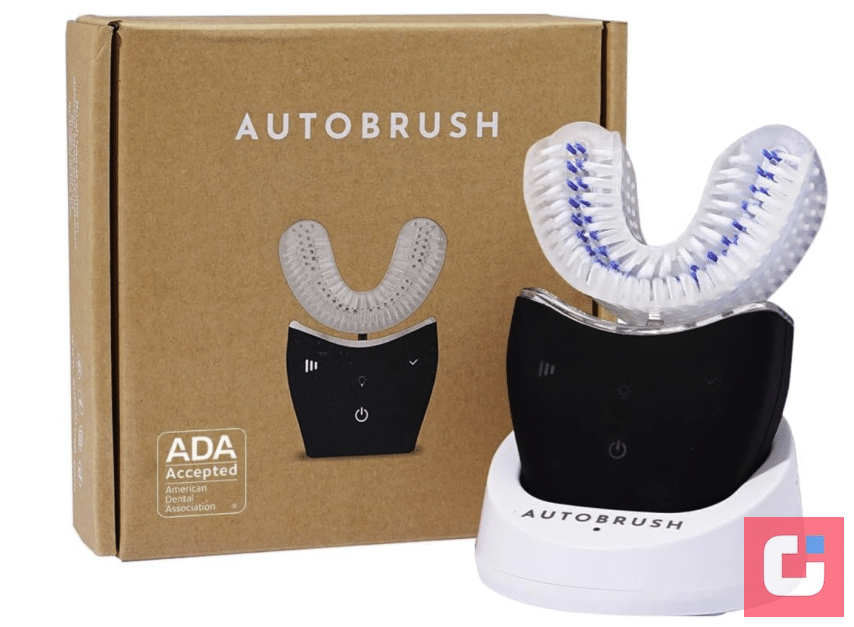
The product images retained here illustrate the AutoBrush range and earlier packaging. Use the current specification and size guide when choosing a generation or replacement head.
Who I recommend it for
- Consider it: you struggle with a conventional brushing routine and can use the mouthpiece as directed.
- Consider it with professional advice: a child or adult has dexterity or sensory difficulties. Fit and tolerance still need an individual assessment.
- Choose a conventional brush instead: your existing routine works well, you prefer precise control with a small head, or the U-shaped head does not fit comfortably.
- Do not buy it as a shortcut: it does not remove the need for appropriate toothpaste, interdental cleaning or dental care.
Design, fit and everyday usability
The mouthpiece is the main attraction and the main limitation. A single head surrounds multiple tooth surfaces, but every mouth has a different arch shape. A head that feels snug is not automatically contacting every tooth correctly. I would prioritise head size and back-tooth contact over colour or bundle extras.
Nylon cleaning bristles distinguish the current model from many silicone-only mouthpiece brushes. That does not make fit irrelevant. If the head causes discomfort, cannot reach the back teeth or requires force to insert, a smaller conventional head may be the better choice.
The handle controls the cycle and settings directly. The current product directions do not require an app download or Bluetooth pairing. The useful setup work is charging, choosing a suitable head and learning the movement.
How to use AutoBrush correctly

- Choose the appropriate head size and read the instructions supplied with your exact model.
- Charge using the supplied equipment and keep charging connections dry.
- Distribute suitable toothpaste over the head as instructed. The brand allows your own toothpaste; foaming and distribution matter.
- Position the head comfortably, select the timer and cleaning setting, then move the brush side to side and in figure-eight motions as directed. Do not hold it still and expect complete cleaning.
- Rinse the head after use, let it dry and replace worn bristles according to the supplied guidance. Do not share a brush head.
The current Sonic Pro offers 30-, 60- and 90-second timers. A short timer is a product setting, not proof that your own technique or tooth coverage is adequate. Follow the directions for your model and your dentist’s advice. Children need supervision and an age-appropriate head and toothpaste.
Cleaning evidence: what the ADA acceptance actually means
The American Dental Association lists the AutoBrush U-shaped Toothbrush Series as accepted, based on safety and efficacy for plaque removal and helping prevent and reduce gingivitis when used as directed. This is meaningful evidence for the listed product, not an endorsement of every U-shaped brush.
That acceptance is a stronger basis for evaluation than anonymous claims that dentists universally reject the category. It also does not establish that every user will get the same result, that an older silicone head performs identically, or that AutoBrush beats every conventional electric toothbrush.
AutoBrush advertises clinical comparisons. I would not translate a headline percentage into a promise about your own mouth or compare percentages from different studies as though the methods were identical. The review’s recommendation rests on the accepted product, correct use and individual fit; it does not claim Pixoneye measured plaque reduction or gum-health outcomes.
LED settings are secondary to bristle contact and technique in my buying decision. I would not pay extra on the assumption that a light setting guarantees whitening or treats a dental condition. Persistent bleeding, pain or sensitivity needs dental advice.
Strengths and limitations
- Strength: an alternative format for someone who finds a conventional routine difficult.
- Strength: the current nylon-bristle series has a verifiable ADA acceptance listing.
- Strength: selectable timers and replaceable heads.
- Limitation: mouthpiece fit and guided movement are essential.
- Limitation: proprietary heads create an ongoing cost and availability dependency.
- Limitation: the handle and charging base add maintenance compared with a manual brush.
Price, replacement heads and subscription value
Check the current price for your chosen size and package. A lower subscription checkout price and a one-time purchase are different commitments; compare the refill interval, recurring charge, cancellation terms and first-year total. Do not assume a bundle contains fluoride toothpaste or your preferred head size.
My value test is simple: the brush needs to make a suitable routine easier enough to justify the handle and recurring head cost. If your existing brush already works well, replacement-head convenience and a familiar technique may be better reasons to stay with it.
AutoBrush’s current warranty page states a two-year standard warranty for qualifying orders, extended to lifetime coverage while subscribed to replacement heads. Its money-back policy describes a qualifying first-order refund window of 30 days from delivery, with proof of purchase and contact with support. Read those conditions before buying; warranty coverage and a trial refund are different things.
Alternatives I would consider
A conventional manual toothbrush is the simplest budget alternative. A conventional Oral-B or Philips Sonicare electric brush is an option if you prefer a small head and control over each tooth surface. Compare the exact model and head cost rather than assume every product from either brand is equivalent.
If you specifically want a mouthpiece brush, read our AutoBrush vs SonicBrush comparison. SonicBrush is a separate brand; it is not a general term for a conventional sonic electric brush. Compare the exact generation, instructions and evidence before choosing.
Final verdict: is AutoBrush worth buying?
I recommend considering AutoBrush for a specific routine or usability problem, provided the head fits and you can follow its movement instructions. Its ADA acceptance supports taking the current product seriously. I would choose a conventional brush if the mouthpiece is uncomfortable or if you already brush effectively and mainly want a cheaper, simpler system.
Make the decision on fit, technique and total ownership cost. AutoBrush should earn its place in your routine through practical usefulness, without relying on promises of effortless cleaning or guaranteed dental results.
Frequently asked questions
Is AutoBrush ADA accepted?
The ADA lists the AutoBrush U-shaped Toothbrush Series as accepted for its stated purposes when used as directed. Check the exact current brush and head; the acceptance does not apply to every U-shaped toothbrush or all accessories.
Is AutoBrush hands-free?
No. Current AutoBrush directions require side-to-side and figure-eight movement to help the head contact the teeth and gumline. Simply biting on a stationary mouthpiece is not the stated technique.
Does AutoBrush use silicone or nylon bristles?
The current Sonic Pro uses a nylon-bristle cleaning head. Earlier designs and other brands can differ, so check the exact replacement head and generation.
Do I need an app or Bluetooth?
The current Sonic Pro product directions describe controls on the handle. An app download or Bluetooth pairing is not a required setup step in those directions.
Is AutoBrush suitable for children?
Choose an age-appropriate head and supervise use. Fit, tolerance and the ability to follow the technique matter. Ask a dentist about suitability where there are braces, pain, sensory difficulties or other individual concerns.
Does the lifetime warranty require a subscription?
The current policy states two years of standard coverage for qualifying orders and lifetime coverage while subscribed to replacement brush heads. Review the current eligibility and claim conditions before purchase.
Sources and image credits
Product facts checked 9 November 2026 against the ADA acceptance listing, current Sonic Pro directions, warranty policy and money-back conditions. Existing AutoBrush product and usage imagery is retained from the review’s media assets; it illustrates the product and is not presented as evidence of Pixoneye clinical testing.
Related Posts

Share this article

Stuart Kerr Spindlow is Pixoneye’s Publisher, Editor-in-Chief and Lead Product Reviewer. He tests consumer products and leads coverage of practical gadgets and personal-media preservation. His reviews focus on usability, limitations, value and the trade-offs that matter when choosing a product. Read Stuart’s full profile.
Leave a Reply