
Comparison: Quick Verdict. I prefer original ZQuiet for a suitable adult who wants a ready-to-use start and flexible movement. AirSnore is the alternative for someone preferring a heat-moulded tooth impression. Neither guarantees a fit or replaces prescribed sleep-apnoea treatment.
Choosing the fitting system
AirSnore vs ZQuiet compares a heat-moulded mouthpiece with original ZQuiet’s ready-to-use presets. The useful question is whether you prefer a formed tooth impression or less preparation. Neither approach guarantees a fit for everyone.
Both products are intended for snoring. Neither replaces CPAP or another prescribed sleep-apnoea treatment, including mild OSA. Quieter snoring does not demonstrate that breathing interruptions have been treated.
This comparison covers the AirSnore mouthpiece and original ZQuiet two-size starter pack. Drops and combo offers are separate AirSnore products. ZQuiet Advance is a different custom-fit product.
But when making the choice of either Zquiet vs Airsnore, potential users should weigh not only the initial cost but also their personal comfort preferences, the longevity of the device, and customer feedback, which can provide real-world insights into the effectiveness of each product.
AirSnore: moulded fit and preparation
To begin our Airsnore vs Zquiet comparison, let me share my first impressions of the AirSnore. When I examine the AirSnore anti-snoring mouthpiece, I immediately notice that it is a mandibular advancement device (MAD) – a customisable mouthpiece designed to keep your airways while you sleep to reduce snoring.
AirSnore’s fitting process forms an impression around the teeth. Follow its supplied heating, cooling and fitting instructions rather than generic timing. This is consumer heat fitting, not a dentist-prescribed custom appliance or a guarantee of comfortable use.
With AirSnore, the fitting process involves a “boil-and-bite” technique which is quite straightforward. Firstly, I submerge the mouthpiece in hot water to soften it. Then, I bite down on the malleable material, allowing it to mould around my teeth and gums for a custom fit. Use its exact fitting instructions and support for a poor impression.
AirSnore’s mouldable material is shaped during fitting, which can appeal to someone wanting a tooth impression. Check the exact supplied material and care information if you have sensitivities. A close impression does not establish dental suitability.
My experience with AirSnore is that its customisation process allows for a snug fit. Using the ‘boil-and-bite’ technique, you can mould the mouthpiece to the contours of your jaw and teeth. Once it’s been fitted, it must be tolerable; persistent pain or pressure needs dental advice.
AirSnore’s moulded fit holds the jaw forward with the aim of reducing snoring. The mechanism does not establish a personal success rate or clinical superiority over a ready-to-use appliance. A dentist-prescribed, custom titratable appliance for OSA is a separate treatment pathway.
AirSnore personalisation happens through heat fitting. Follow the instructions for correcting an initial impression instead of repeatedly reshaping it by guesswork. An initial fitting process is not ongoing screw adjustment.

Original ZQuiet: presets and movement
ZQuiet, on the other hand, is a remarkable product thanks to its approach towards snoring. Its design is based on the premise of mandibular advancement, which means it aims to slightly advance the lower jaw to widen the airway, thereby reducing the vibrations that cause snoring.
One of Zquiet’s prominent features is its Living Hinge Technology that permits some jaw movement. This is quite different from some other anti-snoring devices that might hold the mouth firmly shut.
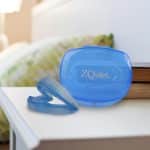
Original ZQuiet contains two separate preset mouthpieces. No boiling is required, but ready-to-use does not mean suitable for every mouth. Material labels do not override dental exclusions.
ZQuiet is often praised for not only being easy to clean but also for its durability. It’s designed to be used straight away, with no molding necessary, which positions it as a convenient choice for many.
For more detail, see our ZQuiet review. This comparison concerns original ZQuiet, rather than assigning it features from Advance.
ZQuiet, on the other hand, takes a different approach to ease of use. It is designed to be used straight out of the box without the need for any preliminary custom moulding. The ZQuiet is hinged, which I notice allows for a degree of flexibility and freedom of movement that can be comfortable during sleep. However, the lack of customisation might be a drawback for users looking for a snugger fit.
Original ZQuiet’s flexible hinge allows movement without a heat-fitting stage. I value that simpler start, but flexibility does not prove greater snoring reduction, make bite changes impossible or guarantee that breathing will feel comfortable.
In contrast, ZQuiet adopts a different approach. It doesn’t offer the same mouldable experience, but its design is created to accommodate a range of mouth shapes and sizes. The device’s flexibility means it’s more of a ‘one-size-fits-most’ solution, which can be beneficial for those seeking simplicity.
ZQuiet uses its preset shape and flexible hinge. I find the movement and lack of boiling convenient. Convenience and treatment effectiveness are different questions, and neither is a reason to bypass dental or sleep-health advice.
ZQuiet’s two supplied mouthpieces offer different preset advancement. That is a different choice from heat moulding, not proof of greater precision for every mouth. Neither original design should be described as a screw-adjustable appliance.

Comfort, dental suitability and care
In assessing Zquiet vs Airsnore, it’s imperative to consider how these mouth guards fit and feel throughout the night. Comfort can significantly influence adherence to using the device, and a personalised fit is crucial for effectiveness.
When comparing the effectiveness of AirSnore vs ZQuiet, it’s important to focus on how each device addresses the problem of snoring. Both products are designed with the aim of reducing or eliminating snoring to ensure a better night’s sleep for the user and their partner.
Durability and replacement
When considering anti-snoring devices, the longevity of the product is a crucial factor. I find that robustness and the expected life span of a device are indicative of both its quality and value for money.
Inspect AirSnore for distortion, cracks and changes in fit. Follow its care and replacement directions and address damage promptly. Do not keep wearing an unsuitable appliance until an estimated lifespan has elapsed.
Apply the same condition-based approach to ZQuiet. There is no dependable universal lifespan winner. Two supplied presets are not necessarily two identical replacement units, so do not count them as guaranteed doubled service life.
Price and purchase terms
Cost is a key factor that could shift the dynamics of our Airsnore vs Zquiet comparison analysis. In this section, I will detail the cost of the AirSnore and ZQuiet anti-snoring devices, focusing on specifics to provide clear value for money insights.
The AirSnore European page distinguishes a mouthpiece, drops and a combo offer. Compare the mouthpiece-only package in your market. Currency, delivery and tax can change the result; a European offer and US dollar price are not directly comparable totals.
On 27 October 2026, the US original ZQuiet two-size starter pack listed $59.95 and a 60-night satisfaction guarantee, subject to terms. Check the actual model, market and channel rather than apply an old 30-day offer to every purchase.
Check the exact model on the invoice and save the seller’s return terms. A paid purchase with a satisfaction return is not a free trial. A warranty against a defect is a different protection.
Check seller identity, package completeness and applicable support. Do not assume every marketplace listing is counterfeit, or that a platform’s returns are identical to the manufacturer’s direct-order policy.
Customer feedback and support
In this section, I’ll highlight real user experiences and sentiments for both AirSnore vs ZQuiet. These reflections from users are instrumental in understanding the effectiveness and comfort of each anti-snoring device.
AirSnore’s references to no special fitting do not mean no preparation. The mouthpiece uses heat fitting at home; the useful distinction is no dentist-made fitting. A person expecting an original ZQuiet-style ready-to-use appliance should understand that difference.
ZQuiet’s movement and simpler start can be attractive, but persistent pain, bite changes or breathing difficulty are not issues to tolerate because a customer review reports comfort. Stop and seek appropriate advice.
When considering anti-snoring solutions, the policies and customer support of the company can be as important as the product itself. Both AirSnore vs ZQuiet offer support structures aimed at assisting customers before, during, and after purchase.
AirSnore’s European page describes trying the product for30 days and returning the order and packaging within60 days if dissatisfied. Read the actual seller’s policy, including deadlines, postage and market restrictions. Do not assume free shipping for every package or country.
ZQuiet’s original starter-pack page currently advertises60 nights. Check its conditions for your seller and market rather than reuse an older trial-fee or30-day arrangement.
Buyer fit, alternatives and recommendation
ZQuiet remains my conditional preference for a suitable adult wanting a simpler start and flexible movement. AirSnore is a relevant alternative for a person specifically wanting a heat-made tooth impression.
AirSnore may suit someone who wants a moulded snoring mouthpiece and can follow its preparation instructions. Compare the exact mouthpiece-only package. Drops are not part of the fitting mechanism or evidence of better mouthpiece performance.
Original ZQuiet may suit someone preferring no heat fitting and a choice between supplied presets. The benefit is convenience, not universal fit, guaranteed relief or a compulsory paid-trial arrangement.
Other mouthpieces have different fitting and adjustment systems. Nasal or positional approaches address different contributors to snoring. CPAP and prescription appliances belong to a clinician-directed sleep-apnoea pathway, rather than a casual swap among OTC products.
I understand that choosing the right anti-snoring device is highly personal and depends on individual preferences, comfort, and effectiveness. Both AirSnore vs ZQuiet have their merits, but the final decision should also incorporate a professional consultation and personal trial.
My conditional choice is original ZQuiet for convenience when it is suitable. AirSnore may appeal more to a person who prefers its moulded-fit approach. Neither should be bought as a less cumbersome replacement for prescribed sleep-apnoea treatment.
Medical suitability comes before a quieter night
The NHLBI identifies breathing pauses, gasping and daytime sleepiness as reasons to discuss sleep apnoea with a professional. Less snoring does not rule it out. Do not stop prescribed CPAP because an OTC mouthpiece is easier to pack.
Ask a dentist before trying a jaw-advancing appliance if you have loose teeth, gum problems, significant dental work, a jaw-joint disorder or ongoing symptoms. Read each product’s exclusions. Persistent pain, tooth pressure or bite changes require stopping and advice; a heat-made impression is not a dental examination.
Follow each manufacturer’s cleaning instructions. A product may permit a different cleaner from another mouthpiece; do not transfer heat, chemicals or abrasive methods between them. Rinse and dry as directed, inspect for wear and keep the storage case clean.
What changes after the first night?
A comfortable first fitting is only part of the decision. Consider retention, morning symptoms, ease of removing the appliance and whether the cleaning routine is practical. An appliance that repeatedly falls out or puts pressure on a particular tooth needs attention. Do not assume greater advancement fixes a poor fit.
Use customer feedback for concrete handling questions, not a clinical success rate. Different anatomy, sleep position and reasons for snoring mean that another person’s experience cannot guarantee your outcome. A retailer average also should not combine original ZQuiet and Advance as though they were the same model.
| AirSnore option | Mouthpiece present? | Heat-fitting task? | Useful comparison |
|---|---|---|---|
| Mouthpiece only | Yes | Yes, follow supplied instructions | Compare with original ZQuiet starter pack |
| Drops only | No | No mouthpiece to fit | A different product, not a jaw-advancement device |
| Combo | Yes, plus drops | Yes, for the mouthpiece | Separate the mouthpiece decision from the added product |
For other fit choices see ZQuiet vs PureSleep and ZQuiet vs SnoreRx. My preference here is a convenience judgement from the original products, not a fresh clinical test or a promise of silent nights.
Frequently asked questions
Does no special fitting mean AirSnore is ready to wear?
No. Its mouthpiece uses heat moulding at home. Original ZQuiet uses ready-to-use presets.
Can either replace CPAP?
No. Do not use an OTC snoring mouthpiece instead of prescribed sleep-apnoea treatment.
Are AirSnore drops included in this comparison?
No. The comparison concerns the mouthpiece; drops and combo offers are separate purchases.
Which lasts longer?
There is no universal lifespan winner. Inspect condition and fit, follow instructions and address damage promptly.
Does regulatory clearance guarantee personal safety?
No. Regulatory status is specific to the device and intended use. It does not remove dental exclusions or guarantee results.
What return period applies?
Read the actual seller’s terms. The US original ZQuiet starter pack advertises60 nights. The AirSnore European page describes trying for30 days and returning within60 days.
Related Posts
Share this article

Stuart Kerr Spindlow is Pixoneye’s Publisher, Editor-in-Chief and Lead Product Reviewer. He tests consumer products and leads coverage of practical gadgets and personal-media preservation. His reviews focus on usability, limitations, value and the trade-offs that matter when choosing a product. Read Stuart’s full profile.
Good AirSnore vs ZQuiet comparison. I tested both alongside SleepZee — ZQuiet’s living hinge technology is genuinely more comfortable for side sleepers, while AirSnore’s custom mold fits better for back snorers. The 60-day vs 30-day trial period is a key difference for buyers.