
HearingAid Max Review: Buying Verdict

Product Name: HearingAid Max
Product Description: Compact ear-level personal amplification device with manual controls; buyers should verify exact OTC hearing-aid status and documentation.
Brand: HearingAid Max
Availability: InStock
Why it scored 2.8/5
The compact fit and simple controls are workable for situational amplification. The score is held back by limited model documentation, weak speech-in-noise confidence and unsupported claims about app, Bluetooth and battery performance.
Overall
-
Fit and controls
-
Everyday speech support
-
Noise handling
-
Support confidence
Pros
- Compact ear-level format
- Simple manual volume control
- Can add volume in quiet one-to-one settings
Cons
- Current documentation does not establish OTC hearing-aid status
- No verified support for app or Bluetooth claims
- Basic amplification may raise background noise as well as speech
My verdict: HearingAid Max can amplify everyday conversation in a compact ear-level format, but the current documentation does not support the old claims of app-based fitting, advanced Bluetooth features or multi-day performance. I would consider it only as a basic personal amplifier after a hearing check—not as a substitute for a documented, self-fitting OTC hearing aid.
The most important distinction is classification. The US Food and Drug Administration separates regulated over-the-counter hearing aids for adults with perceived mild-to-moderate hearing loss from personal sound amplification products. A device should not be treated as an OTC hearing aid merely because a sales page uses the word “hearing.”
What it is
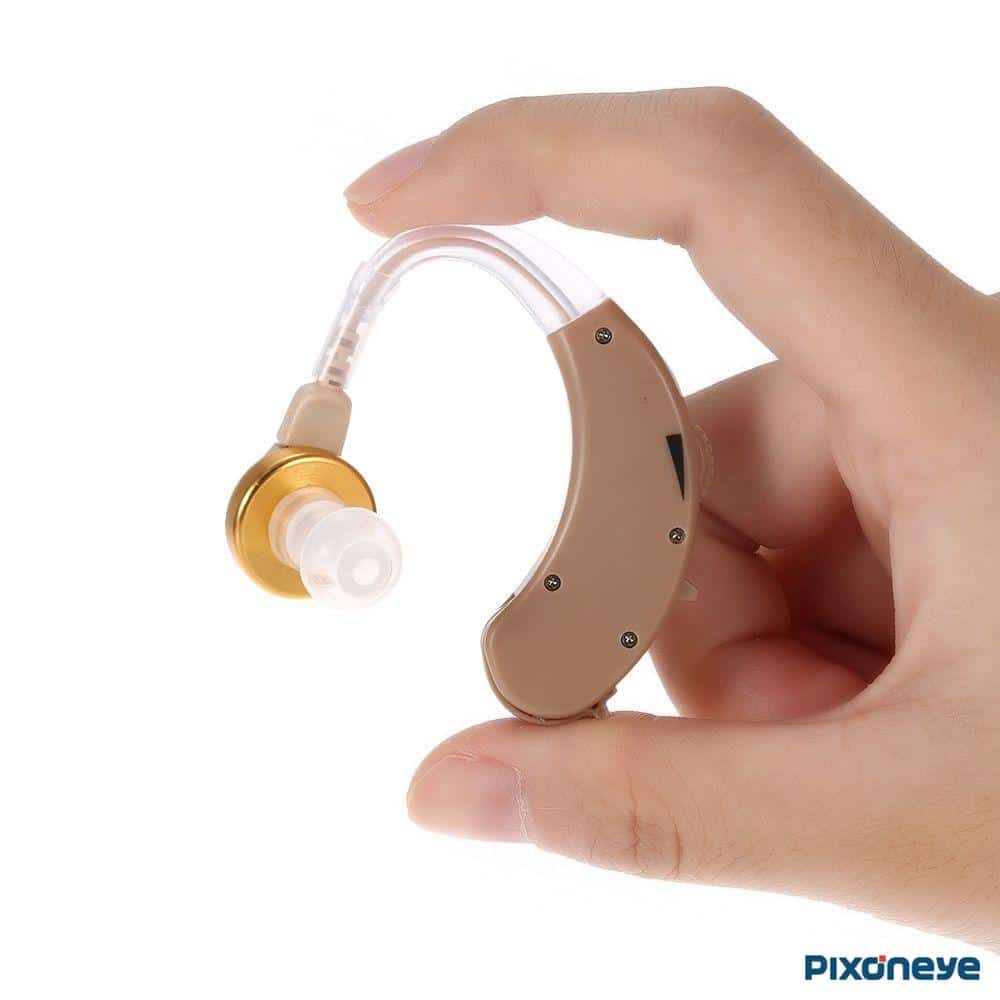
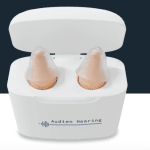
The current seller page presents HearingAid Max as an ear-worn amplification device with manual volume control. The product photography supports a compact behind-the-ear style and physical controls. It does not establish individualized fitting, frequency-specific programming, a companion app, medical-grade noise reduction or any particular battery duration.
In use, the practical questions are ordinary ones: can you place it comfortably, adjust volume without feedback, understand speech in a quiet room and keep the earpiece clean? Those are more useful than a long feature list copied from a landing page.
Fit and listening experience
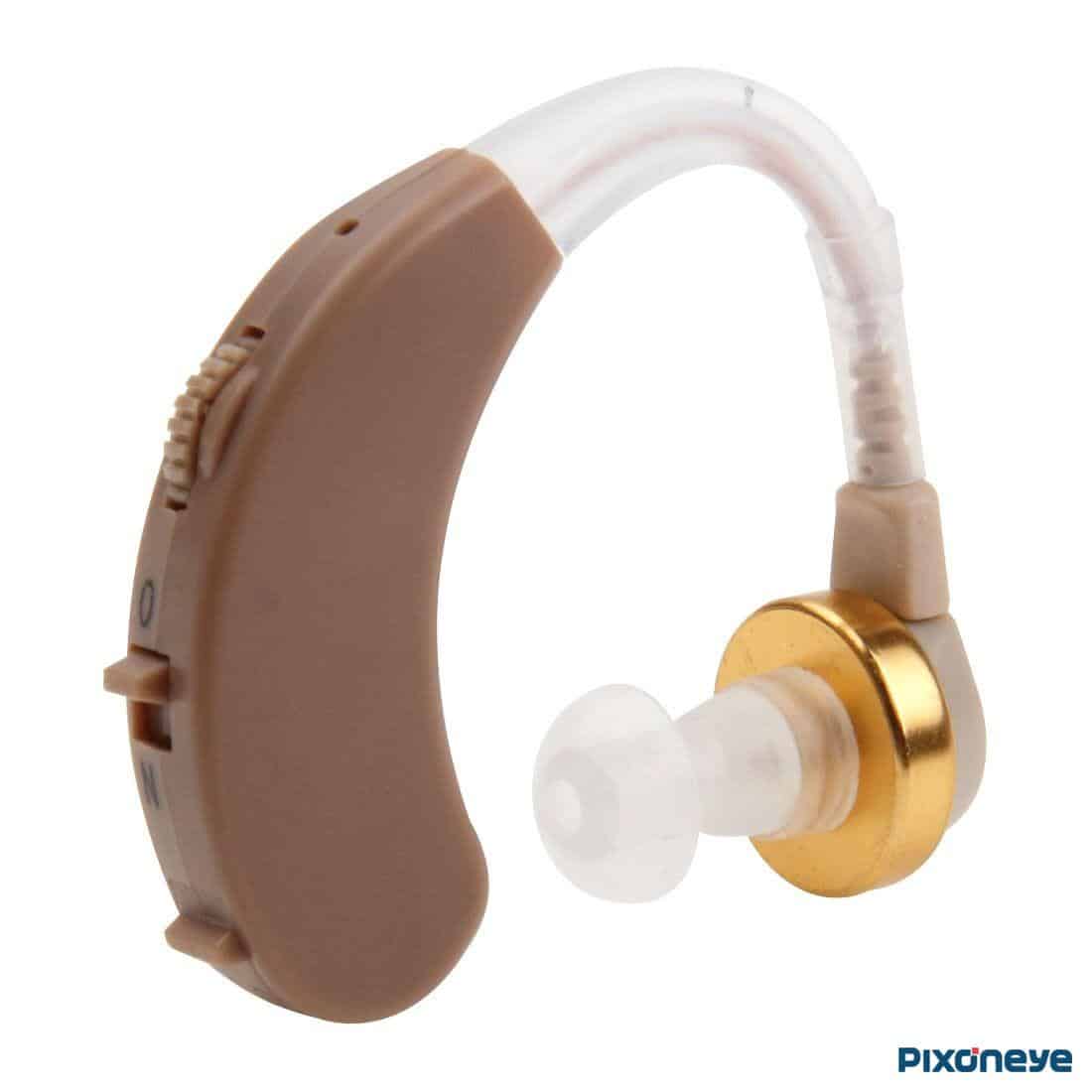
The body is light enough for short sessions, but comfort depends on the ear tip, tubing position and glasses. Start at the lowest setting before inserting it. Raising volume too quickly can make room noise, handling sounds and your own voice more prominent without making speech proportionally clearer.
- Quiet one-to-one conversation is the most realistic use case.
- Busy restaurants and group conversations remain difficult for basic amplifiers.
- Whistling usually means the tip seal, tube position or volume needs attention.
- An uncomfortable tip is a reason to stop and refit, not to push the device deeper.
- One-sided or sudden hearing changes need medical attention rather than a mail-order gadget.
| Need | Better starting point | Reason |
|---|---|---|
| Occasional extra volume in quiet settings | Basic amplifier | Simple controls may be enough when expectations are modest. |
| Perceived mild-to-moderate hearing loss | Documented OTC hearing aid | Regulated labelling, return terms and self-fitting features provide a clearer buying basis. |
| Asymmetric, sudden or worsening hearing | Clinician or audiologist | Those patterns can require medical assessment. |
| Severe loss or poor speech understanding | Professional fitting | More gain alone does not solve every hearing problem. |
Documentation and support
The FDA advises checking labelling, return policies, warranty, customer support and whether a device is intended for the buyer’s type of hearing difficulty. HearingAid Max’s current sales route confirms the product identity, but it does not provide the model documentation and fitting evidence I would want before relying on it daily.
That gap lowers the score more than the basic shape or controls. A low-priced amplifier can still be useful, but replacement tips, cleaning parts, charging details and a usable return route determine whether it remains useful after the first week.
Safety and sensible setup
- Have earwax, infection, pain, drainage, sudden loss or one-sided change assessed first.
- Read the current instructions and inspect the device, tube and tip for damage.
- Begin in a quiet room with the volume at minimum.
- Try one ear at a time and stop if sound is painful, distorted or causes dizziness.
- Clean only as instructed and keep the device dry unless the exact manual says otherwise.
- Use the return window if speech does not become meaningfully easier.
Who it suits
It suits an adult who wants inexpensive situational amplification and accepts limited documentation. It is a poor fit for anyone expecting smartphone streaming, self-fitting frequency adjustments, strong speech-in-noise performance or clinical support.
Buying advice
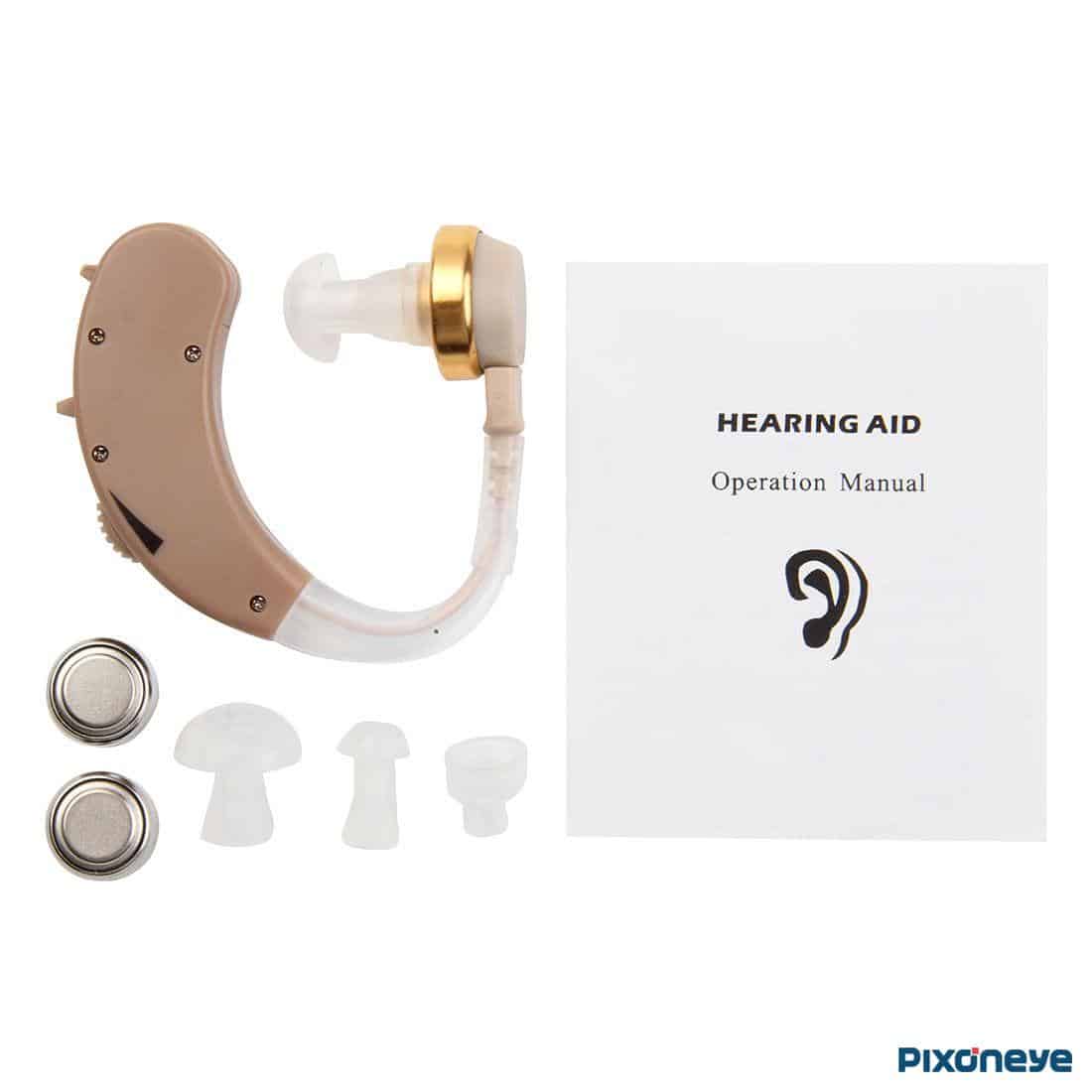
Confirm the package contents, charging method, spare-tip sizes, warranty, return deadline and seller contact details. For regular use, compare the total cost with an FDA-authorized OTC hearing aid whose labelling and fitting method can be verified.
Frequently asked questions
Is HearingAid Max an FDA-authorized OTC hearing aid?
The current product information does not establish that status. Check the exact manufacturer, model and labelling before treating it as a regulated OTC hearing aid.
Can it help in restaurants?
A basic amplifier may raise all nearby sound, including background noise. Speech-in-noise performance depends on processing and fit, not volume alone.
Who should not self-treat with an amplifier?
Seek professional care for sudden or one-sided loss, pain, drainage, dizziness, deformity, an object in the ear or rapidly worsening hearing.
What should I test during the return window?
Check comfort, feedback, quiet-speech clarity, control access, charging, cleaning and whether the seller’s support actually responds.
Related Posts

Share this article

Stuart Kerr Spindlow is Pixoneye’s Publisher, Editor-in-Chief and Lead Product Reviewer. He tests consumer products and leads coverage of practical gadgets and personal-media preservation. His reviews focus on usability, limitations, value and the trade-offs that matter when choosing a product. Read Stuart’s full profile.
Leave a Reply